30 Must-Play Open World Masterpieces IGN30
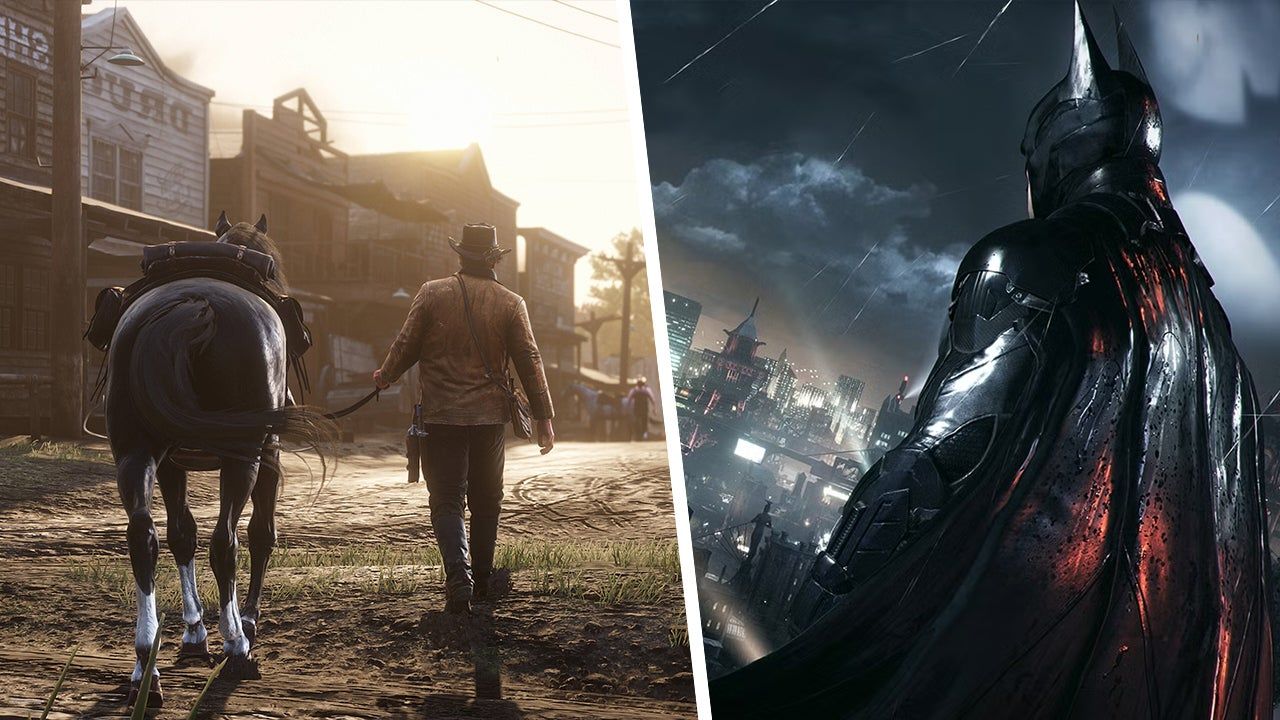
This text is a critical essay arguing for the evolution of the open-world genre, tracing a philosophical journey from mastering contained systems to achieving unparalleled narrative and environmental immersion.
Here is a summary of the key arguments and comparisons presented:
Core Thesis: The Evolution of Open-World Design
The essay posits that the success of modern open-world games lies not just in the size of the world, but in the mastery and application of the systems that govern that world. It traces a path where games evolved from focusing on system mastery (Metal Gear Solid) to systemic sandbox experimentation (The Legend of Zelda) to ultimate lived-in immersion (Red Dead Redemption 2).
Key Comparisons and Themes
1. Mastering the Sandbox (Metal Gear Solid):
The essay begins by noting that effective open-world design is about mastering a contained space and the tools within it. Metal Gear Solid 5 is highlighted as an example of how to refine stealth and tools into an “irresistible” gameplay loop, pushing the series’ design forward.
2. Systems-Led Exploration (The Legend of Zelda):
The essay shifts focus to how open-world games can encourage genuine discovery through malleable systems.
Breath of the Wild (BOTW): Established the concept by teaching players to explore as a necessity, using physics and player imagination to solve problems.
Tears of the Kingdom (TOTK): Built on this foundation by adding layers of emergent gameplay (Ultrahand and Fuse), creating a harmonious, interactive world where systems work together to support exploration rather than merely serving as a backdrop.
3. Deep Immersion and Simulation (Grounded Worlds):
The text then contrasts system-focused games with those that prioritize realistic presence and consequence:
Kingdom Come: Deliverance 2: Emphasizes deep immersion, where the consequences of every action—through dialogue and NPC reactions—root the player into a consequential, simulated experience, leaning into RPG mechanics.
Microsoft Flight Simulator: Represents the pinnacle of realistic world recreation, showcasing how technology can build a massive, accurate, real-time environment, leveraging data to create a world that feels genuinely real.
4. Escapism and Atmosphere (Thematic Worlds):
Other games are discussed based on their specific forms of escapism:
Sea of Thieves: Offers thematic escapism (piracy) wrapped in a charming, open-world adventure.
Death Stranding 2: On the Beach: Focuses on a “sim-like” journey, where the open world dictates the player’s path and connection to others, blending action with simulation.
Forza Horizon 6: Demonstrates successful aesthetic and cultural immersion through environmental detail and dynamic seasonal shifts.
The Overall Masterpiece: Red Dead Redemption 2
The essay culminates in declaring Red Dead Redemption 2 (RDR2) as the overall masterpiece. The argument is that while other games excel in specific areas (e.g., mechanical flexibility in Tears of the Kingdom, visual realism in Flight Simulator), RDR2 achieves a unique level of lived-in immersion.
The essay praises RDR2 for:
Unparalleled World Fidelity: The world feels genuinely alive, with towns and wilderness that feel like they are ticking over regardless of player presence.
Narrative Depth: It successfully blends mature storytelling with open-world exploration, drawing lessons from other genres (GTA, The Witcher) to create overlapping, meaningful questlines.
Substance over Mechanics: It proves that the deepest form of open-world experience is achieved when the environment is handcrafted to be lived in, rather than just a container for activities.
Conclusion
The essay concludes that open-world gaming has evolved significantly, moving from mechanical experimentation to simulated environments, and finally to a state where narrative spectacle and deep, organic immersion—as masterfully achieved by Red Dead Redemption 2—represent the highest form of digital escapism.
Buy on Amazon
Credit