9 Visual Shifts That Changed Football Action
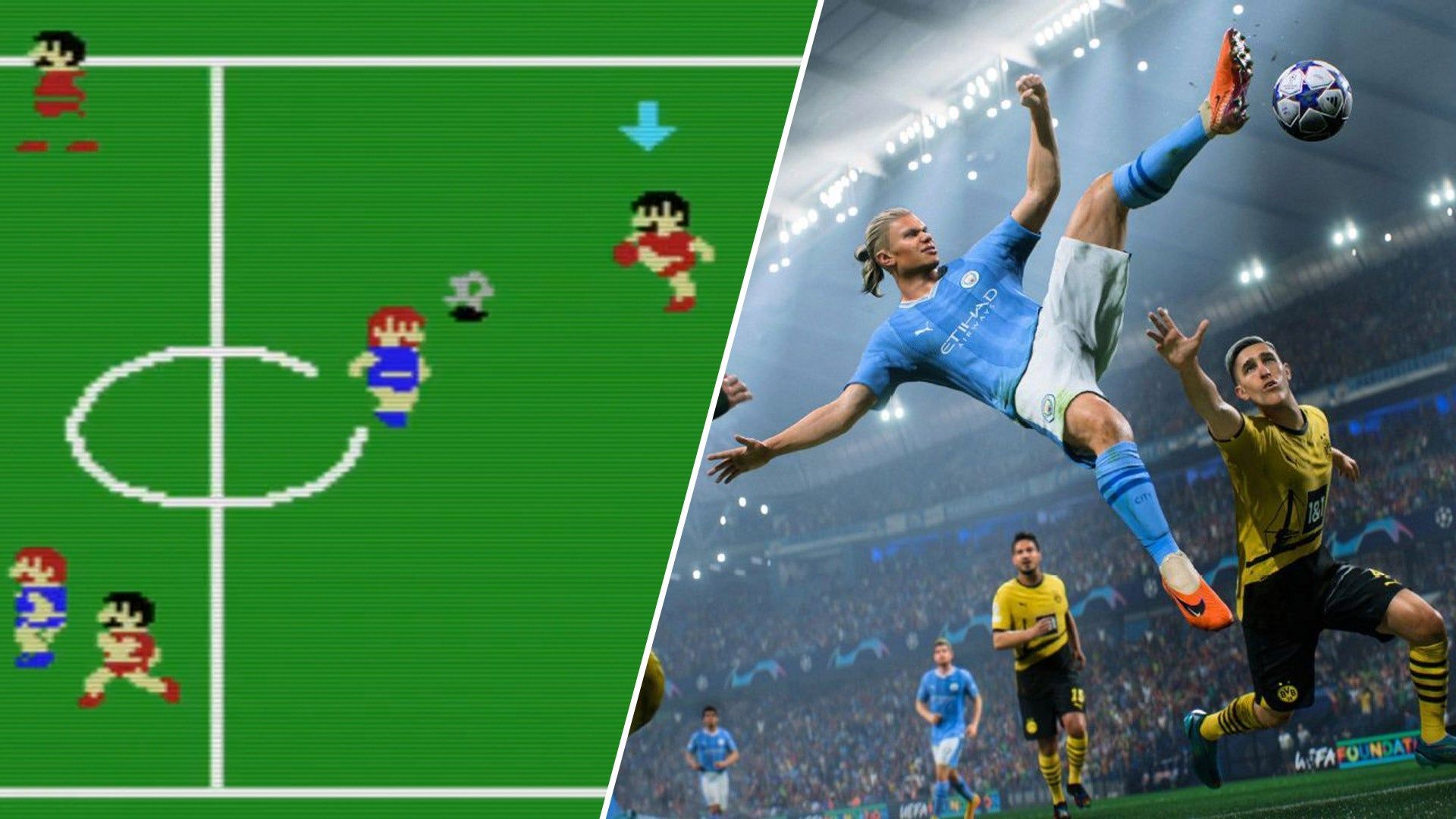
The evolution of football video games isn’t just an incremental update; it’s a story of generational leaps that fundamentally reshaped how we view the sport on screen. While today we are constantly tweaking EA’s behemoth FC series, it’s easy to forget that the genre once took massive evolutionary steps every few years.
To understand why modern simulations feel so deeply satisfying—or sometimes frustrating—we have to look back at the features that truly redefined football gaming. Through examining nine of the most impactful innovations, we can trace how games moved from simple arcade fun to complex tactical simulations.
One of the earliest shifts involved how players interacted with the game. Early football titles required players to manually input directions for passing, which felt cumbersome. The introduction of CPU-assisted passing, first appearing in games like Konami’s Soccer and NES Soccer in 1985, smoothed this out. Instead of precise aiming, players could give vague directional input (like “up-left”), and the game would interpret that as a request to pass the ball to the nearest player in that direction. This mechanic became the standard passing system by the mid-90s, showing an early acknowledgment that AI assists were necessary for smoother gameplay.
The visual landscape changed dramatically with the arrival of 3D graphics. While 2D games like World Cup Italia ’90 were charming, the arcade hit Virtua Striker in 1994. It was the first game to introduce true three-dimensional polygonal players with detailed animations. Though their limbs might have looked a little cursed in hindsight, these realistic models pointed directly toward the future of simulation and convinced developers that 3D graphics were the inevitable path forward.
Next came innovations focused on ball movement. In the early 2000s, while FIFA was popular, Pro Evolution Soccer offered a purer, messier realism that many considered more satisfying. The key innovation here was the through ball. This mechanic allowed players to kick the ball into space in front of a sprinting teammate with a single button press—a move that Konami perfected in the PS2 era. This ability unlocked tactical genius; it felt incisive and rewarding, establishing itself as the hallmark of high-level football play across the industry.
Control refinement followed quickly. The initial attempt at enhanced player control arrived with FIFA 2003’s “Freestyle Control System.” Though initially clunky, this skill stick gradually evolved over a decade of refinement. It transitioned players from relying on complicated button combos to intuitive gestures, allowing for quick tricks and smoother movement. Today, high-level players utilize complex skill moves to deceive defenders, proving that the evolution of control is key to player expression.
Another game-changing feature was the “Finesse Shot.” In titles like Pro Evolution Soccer 5, players learned that scoring wasn’t just about aiming; it was about nuance. The ability to execute a controlled shot—curling the ball past a diving keeper while manipulating aim and power—created an entirely new dimension of offensive play. This concept has since been absorbed into every simulation, proving that precision over raw power is often the most artistic way to score.
The shift in mode design was equally explosive with the introduction of Ultimate Team. While EA experimented with similar concepts earlier, the official launch of Ultimate Team in March 2009 for FIFA 09 combined competitive action with a compelling system of card collecting and team building. This mode introduced an element of luck-based compulsion, blending the excitement of online multiplayer matches with the allure of acquiring rare items, creating a massive economic ecosystem that continues to drive engagement.
The freedom of movement also advanced significantly. While many games remained limited to eight directional inputs even as they boasted 360-degree dribbling in FIFA 10, this feature unlocked true agility. Being able to slip through tight spaces and smoothly change direction while sprinting gave players a newfound connection to their characters, allowing for truly fluid attacking maneuvers.
Finally, the evolution of defending moved from a rigid system to a dynamic one. Earlier football games required holding a single button to both pressure and tackle opponents. FIFA 12 revolutionized this by decoupling these actions. Players could now choose between “containing” an attacker or initiating a tackle, rewarding patience and tactical positioning rather than aggressive diving. This evolution is reflected in the latest updates with concepts like advanced defending, moving away from simple one-button systems toward sophisticated, situational tackling mechanics.
Most recently, EA FC 24 introduced playstyles, fundamentally changing player identity. Moving beyond simply judging players by their overall rating or positional attributes, the concept of distinct playstyles—such as “Bruisers” who bounce opponents away or “Press Proven” players who maintain ball possession—gave personality to every squad. This shift allowed players to value specific abilities and animations over generalized stats, proving that a player’s unique method of play can be just as valuable as their overall rating.
These nine features, from basic passing mechanics to complex tactical defense and the economic lure of Ultimate Team, illustrate how football video games have continuously evolved, constantly pushing the boundaries of what we expect from simulation. They are not just games; they are living histories that define the immersive world of sports simulation.
Buy on Amazon
Credit