DLSS 5 Live: What the Gamescom Demo Revealed
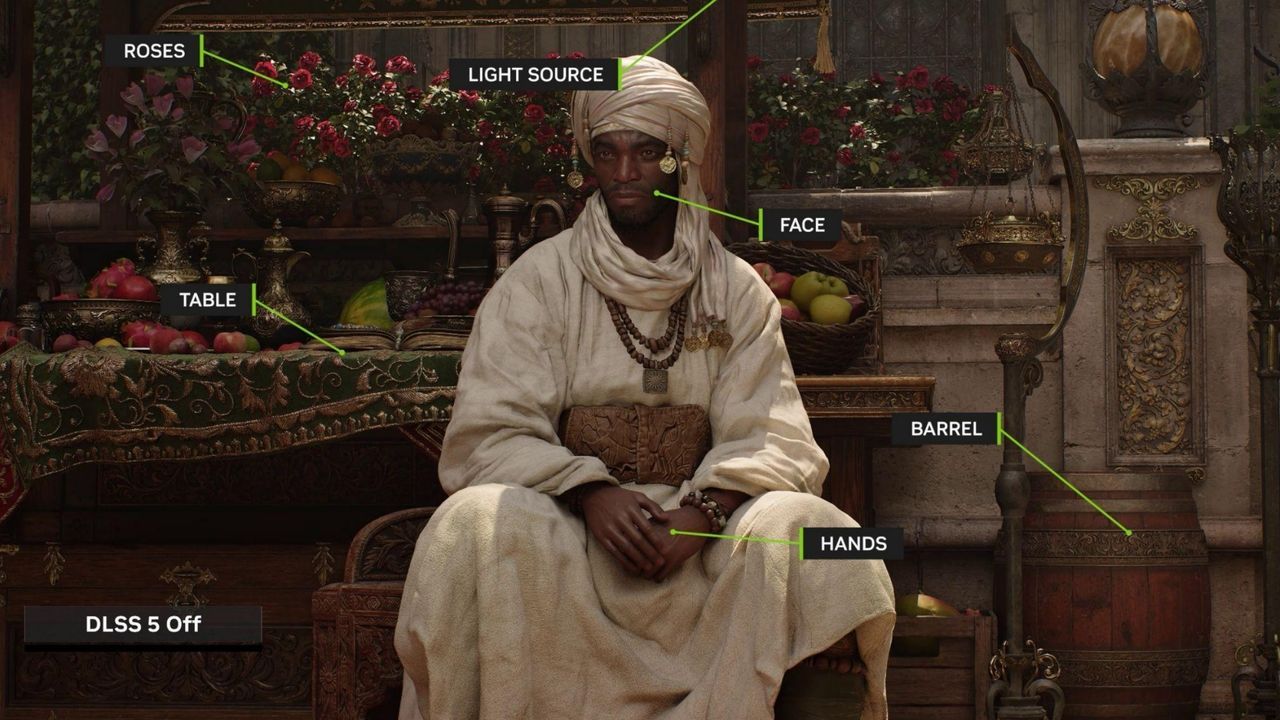
The world of PC gaming is buzzing with anticipation, especially as the much-hyped DLSS 5 is set to launch later this week on September 3rd. But this isn’t just another frame rate boost; this new iteration of Nvidia’s upscaling technology represents a significant philosophical shift in how games are rendered, forcing a conversation about the line between technical optimization and artistic freedom.
When DLSS 5 was first revealed, the conversation immediately turned heated. Unlike previous versions that focused primarily on rendering at a lower resolution and then polishing the result with AI, DLSS 5 takes a radically different approach. Instead of simply optimizing performance, it aims to help graphics cards achieve “true photorealism.”
To achieve this, Nvidia is employing what they call 3D-guided Neural Rendering—a method that uses a 2D, generative AI layer placed over a game’s rendered frames. In essence, it doesn’t remodel the frames for performance; it introduces a generative layer that enhances or changes the quality of the image itself.
This shift naturally raised eyebrows. Some felt it looked less like performance enhancement and more like applying a pervasive filter—a sort of “yassifying” of game assets. The concern wasn’t just about aesthetics; it was about standardization. Many artists worry that this technology seeks to impose a uniform visual style, potentially detracting from the unique, hand-crafted graphical approaches that individual developers strive for.
Fortunately, the technical architects addressed these concerns by introducing powerful developer tools. Nvidia has equipped game developers with a suite that allows them to manage the AI process with granular control. Artists can now select specific elements—clothing, facial models, hair, or environmental objects—and adjust parameters like tone or structure intensity. This means developers can guide the AI enhancements precisely where they are needed, ensuring the vision remains firmly in their hands.
This level of control suggests that DLSS 5 is positioned as a separate creative tool for developers, rather than a mandated solution. It’s designed to operate under the developer’s artistic direction, ensuring that the AI models are steering the visual outcome, not the other way around.
This is crucial for the future of the industry. While some worry that the technology is inevitably creeping into more games, the reality is that developers must consciously choose to opt-in and configure the technology. It won’t automatically apply an AI-driven aesthetic, allowing for a spectrum of visual styles to persist.
Furthermore, the focus seems squarely aimed at photorealism. While titles like sports simulations, such as the upcoming NBA 2K27, are natural candidates for this type of enhancement, there is plenty of room for other artistic styles. The debate shouldn’t be whether games should aim for perfect realism, but whether they should pursue it, and whether doing so inherently makes them “better.”
Ultimately, while gamers won’t have direct access to these deep developer settings, the underlying message is clear: the power of AI in game visuals is being handed to the creators. DLSS 5 promises a powerful new layer for visual fidelity, but the success of the technology will depend entirely on how developers—and players—choose to wield it.
Credit