Epic Launcher is faster than Steam
Vibe Coding: How Epic Games Used AI to Rewire Its Store and Gain an Edge
Nearly eight years after Epic Games took on Steam with its own Game Store and launcher, the industry has been watching closely to see how the two behemoths manage digital distribution. But in a move that pushes the boundaries of game development and software engineering, Epic has taken a radical approach, deploying a novel technique they are calling “vibe coding” to fundamentally overhaul the Epic Games Launcher and Store.
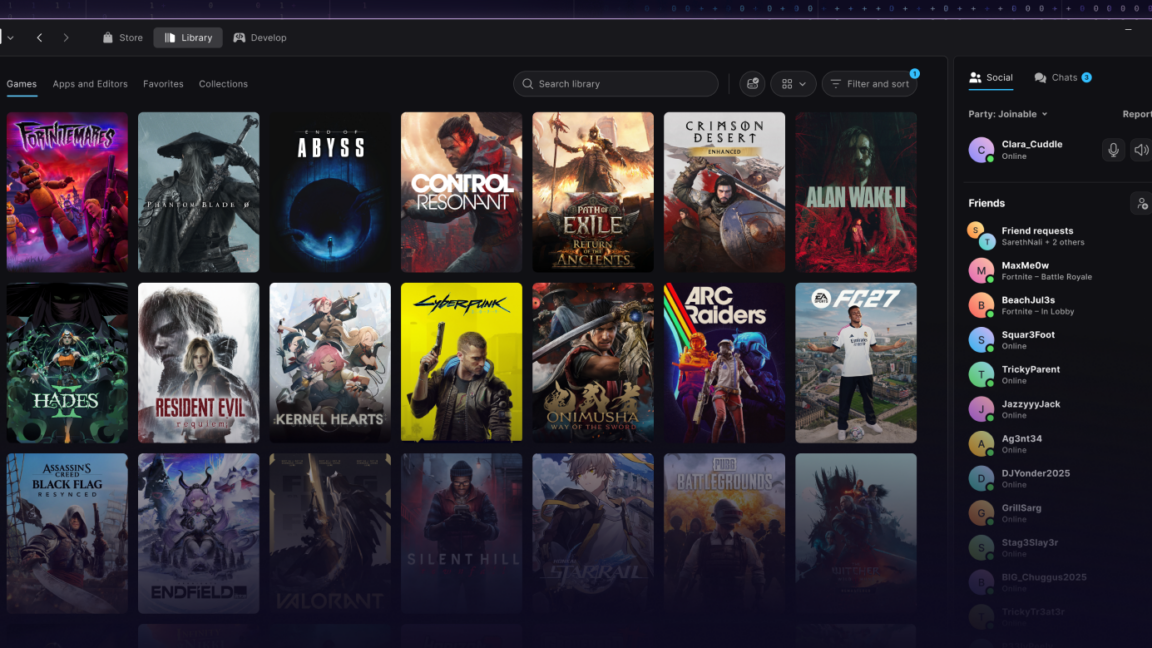
This isn’t just a cosmetic refresh; it’s a deep dive into how software can be built. In an announcement for their publicly available “Preview” build of the Epic Games Launcher, the team revealed a shift in methodology. Instead of relying solely on traditional coding processes, Epic harnessed the power of artificial intelligence to achieve a faster, more responsive, and visually updated platform.
The core philosophy behind this revolution, according to Epic Games Store General Manager and VP Martin Keely, is simple yet audacious: programming is hard. So, why spend countless hours writing code when you can use AI as a tool to reimagine the entire foundation?
Keely explained that the team chose to start from scratch, leveraging AI as an instrumental partner to write and review new features and capabilities from the ground up, utilizing a different technological stack than they had previously employed. The goal was not to simply copy existing code, but to understand the desired functionality and replicate it in a vastly superior structure.
This approach allowed a small team to significantly boost efficiency. By outsourcing the initial heavy lifting and utilizing AI-driven ideation, Epic was able to rewrite the codebase quickly and launch a dramatically improved product faster than traditional development cycles would allow.
The impact of this initiative extends far beyond mere speed. The new system is designed to be inherently more responsive and user-friendly, offering a noticeably faster experience for all users navigating the store and launcher.
Furthermore, the efficiency gains facilitated by vibe coding allowed Epic to achieve a major strategic goal: broader accessibility. The rewritten architecture was built to support seamless cross-platform operation, ensuring the launcher functions flawlessly across Windows and Mac, and setting the stage for a future Linux version.
By leaning into this cutting-edge methodology, Epic has not only updated its interface but has also redefined its approach to software development, proving that innovation—even in coding—can be achieved through creative, AI-assisted collaboration. It’s a testament to how a fresh perspective can turn a complex technical challenge into a major competitive advantage.
Buy on Amazon
Credit
