GTA V Action and Legacy Review
When looking back at the grand lineage of Grand Theft Auto games, the sheer scale and enduring success of Grand Theft Auto V is staggering. Thirteen years, three console generations, and over 230 million copies sold. These numbers don’t just tell a story of commercial dominance; they speak to an almost unparalleled level of player obsession. But what truly makes GTA V so remarkable isn’t just the revenue—it’s the way it redefined the open-world experience.
The magic of the series, especially in its evolution, lies in how Rockstar manages world-building. While games like GTA IV presented a dense, urban sandbox, Los Santos in GTA V exploded outward. It is a world that dwarfs its predecessors, encompassing a sprawling landscape of deserts, forests, mountains, and distinct districts that feel genuinely alive. This expanded vision—more than twice the size of GTA: San Andreas—demonstrates Rockstar’s knack for creating environments that feel vast and endlessly explorable.
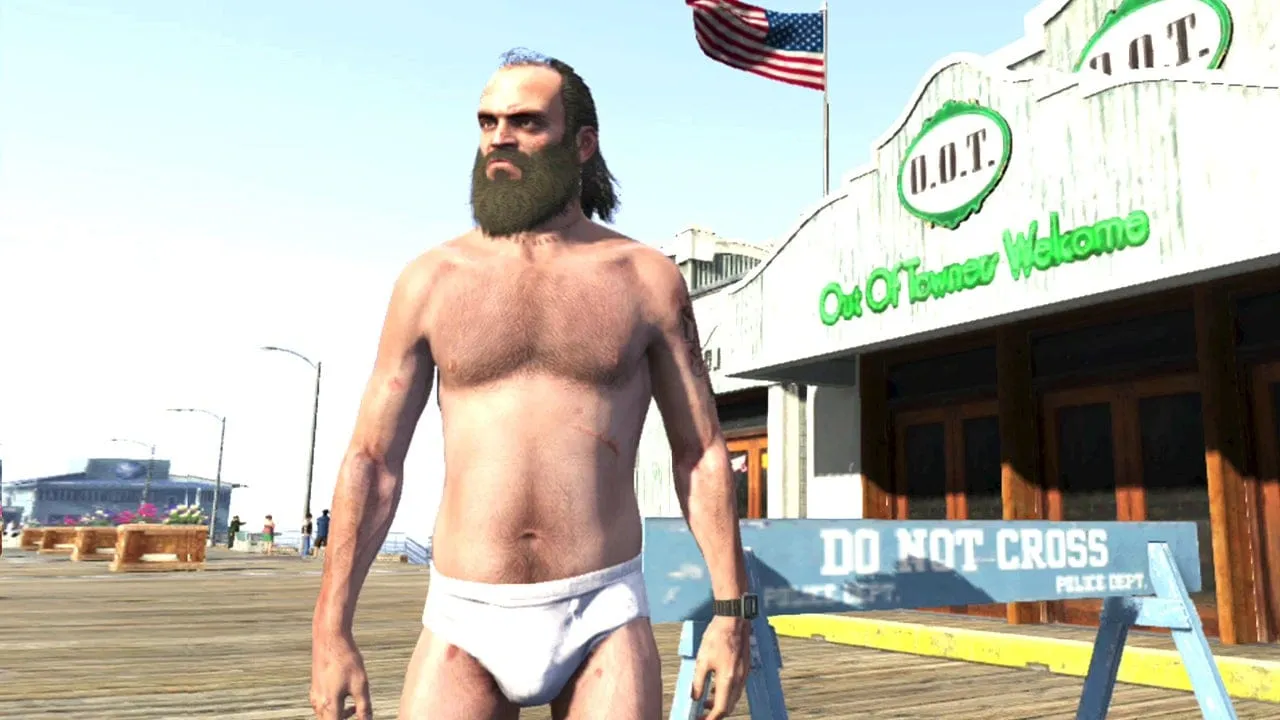
A significant aesthetic shift accompanies this scale. Moving away from the grittier, colder tones of earlier titles, Los Santos is bathed in a dazzling, sun-bleached brilliance. The bright, sharp lighting and vibrant atmosphere create a striking visual departure, transforming the environment into something both gritty and intensely immersive. This aesthetic change perfectly complements the varied geography, blending affluent neighborhoods like Vinewood Hills with the sun-drenched backalleys of South Los Santos.
This immersion is achieved through accumulation. Rockstar doesn’t rely on single shocking details, but rather thousands of subtle elements—a particular piece of graffiti, a weathered pole, or unique architecture—that combine to create a deeply authentic, lived-in reality. The genius is that these details don’t necessarily stand out on their own; together, they make the world so realistic that you stop noticing the seams, allowing true immersion to take hold.
At the heart of this expansive world is the series’ smartest structural innovation: the trio of protagonists. By allowing players to seamlessly switch between Michael De Santa, Franklin Clinton, and Trevor Philips, Rockstar creates dynamic, varied experiences. This system is far more sophisticated than simply adding faces; it enables players to explore the vast map from multiple, distinct perspectives, adding depth to the sheer scale of Los Santos.
The mission design in GTA V benefits immensely from this multi-protagonist structure. By introducing mission checkpoints, the game sheds the frustrating cycle of starting over after failure. This change allowed missions to become longer, more layered, and more ambitious, pushing players toward truly wild and intricate adventures. The focus shifted heavily toward meticulously planned heists, taking iconic concepts and building elaborate scenarios where the unique skills and personalities of the three characters become essential to the success of the plan.
Beyond narrative structure, the gameplay itself is polished to a high degree. Vehicle handling has been refined, offering a dynamic and grippy feel that encourages high-octane driving. The movement and combat systems are equally brilliant, delivering satisfying sound design where every firefight thunks and every vehicle maneuver feels impactful. The integration of the weapon wheel further enhances the experience, giving players control over extensive hardware and weapons.
GTA V remains a benchmark for open-world action-driving games. By combining an enormous, detailed world, dynamic character interactions, expertly layered missions, and technical polish, it stands as the peak of the series. It is a masterpiece that continues to set the standard for what an open-world game can achieve.
Buy on Amazon
Credit