Guns of Eschaton: Soulslike Shooter Action
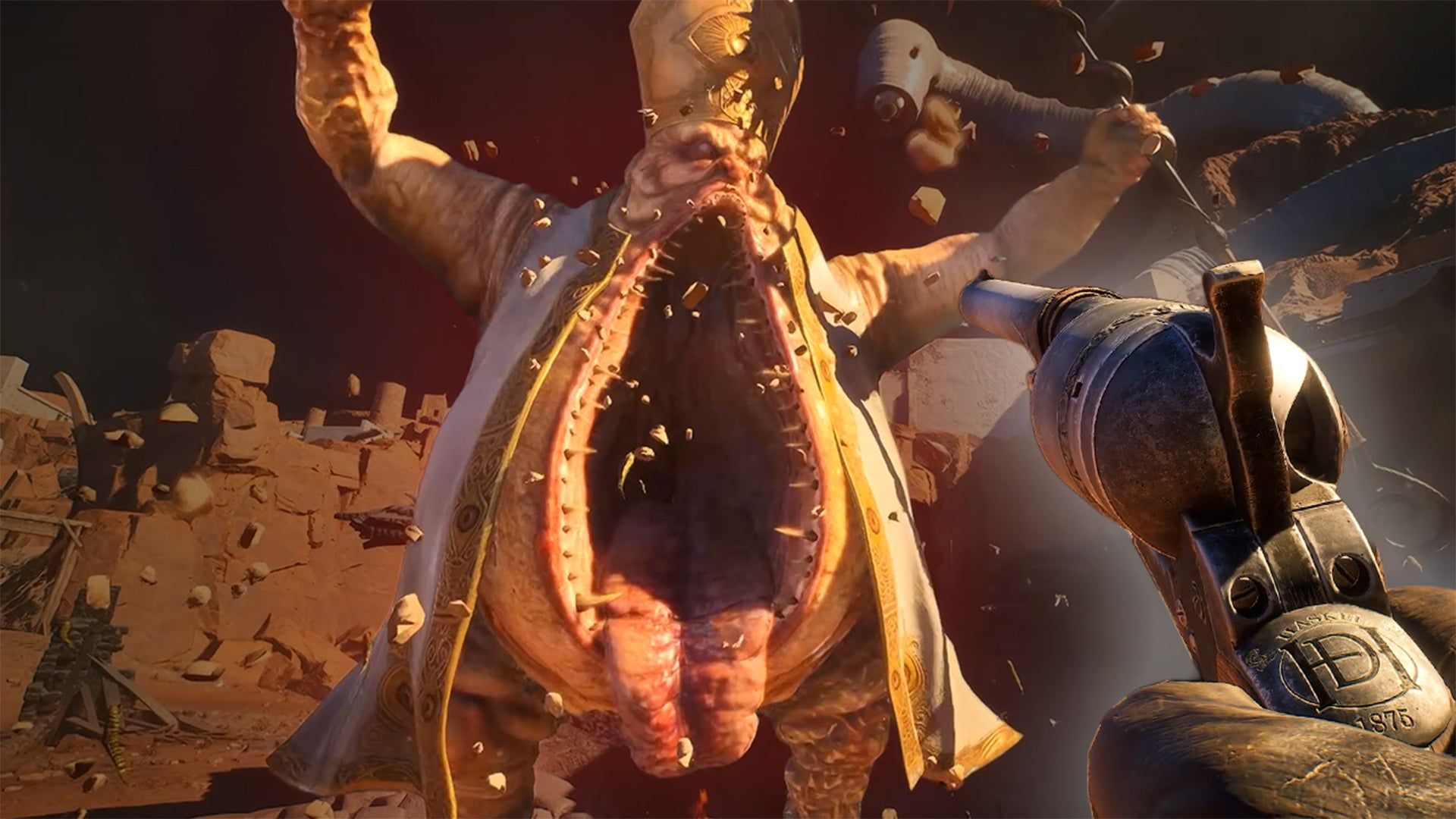
After a decade immersed in the world of soulslikes, one has a solid understanding of how to defeat an impossible challenge. Yet, even seasoned veterans admit that climbing the Souls mountain is rarely truly impossible. But when a game dares to radically redefine those foundations, it demands a new kind of mastery. That is the promise of Guns of Eschaton.
This title isn’t your typical soulslike; it plunges players into an apocalyptic, weird west setting with a first-person shooter perspective. This shift immediately renders certain muscle memories obsolete, forcing players to adapt to a new set of rules while still embracing the genre’s core loop—earning currency from kills, suffering severe penalties upon death, and relentlessly pursuing the next objective.
The true complexity of Guns of Eschaton emerges through its unique mechanical systems. Instead of simple combat, the experience demands a deep engagement with the physics and logistics of 19th-century firearms. Handling a six-shot single-action revolver, for instance, is an excruciatingly lengthy ordeal: players must manually cock the hammer, eject spent shells, and carefully reload ammunition. Managing the cylinder, even with the ability to manually rotate it to align chambers for special bullets, transforms simple combat into a precise, tactical puzzle.
More intricate still is the shot sequence system. To achieve efficient kills, players must learn specific patterns: blasting the left and right leg of a Serviteur, or capping the left leg, left arm, and head of a Severed Lawman. This reliance on memorizing and executing precise sequences makes every engagement a calculated duel, turning enemy encounters into combat puzzles.
Further elevating the action is the system of bullet-stopping and parrying. When enemies fire, the player must react by deflecting the incoming shot—a system reminiscent of classic melee combat. Perfect timing triggers a brief window of slow-motion, allowing for a powerful counter-attack. While this mechanic is deeply satisfying, facing multiple simultaneous threats or unpredictable snipers can introduce frustrating unpredictability, adding a layer of pressure that makes timing absolutely critical.
Beyond the gunplay, the game layers new ideas onto the soulslike framework. Players encounter a library of abilities from NPCs and a magic system involving prayers and curses. However, the potential for future expansion lies in the protagonist’s bandolier, which Creative Director Fuad Kuliev envisions as a customizable system allowing for unique handguns, each with custom ammunition arrangements. This opens up exciting possibilities for tailoring the combat experience to specific boss encounters.
The world itself is equally compelling. The setting features the bold, brutalist style of artist Viktor Antonov, translating his dystopian vision into a rugged frontier marked by sheer cliffs and chunky details. While some introductory areas feel sparse, the promise of later environments suggests a richly detailed, lived-in wasteland waiting to be explored.
Ultimately, Guns of Eschaton challenges players to master not just combat reflexes, but logistical planning and sequence memorization. It forces a rethinking of genre conventions, proving that when a game manages to make every confrontation feel like a duel, even the most punishing challenges can become an irresistible journey.
Buy on Amazon
Credit