Humankind 2 Rethinks History’s Biggest Controversy
Key Preview Takeaways:
- Switching cultures is no longer mandatory.
- Your society is constructed of building blocks picked up along the way from multiple different cultures.
- Nature plays a much larger role than it did in the first Humankind.
The great question for any civilization is not merely which culture to adopt, but how that identity is forged. Amplitude’s upcoming entry, Humankind 2, throws this central debate out the window, suggesting that the true story of history lies not in monolithic cultures, but in the complex tapestry of cultural exchange.
While predecessors in the genre typically forced players to select a single historical culture at the start—like the Greeks or the Egyptians—Humankind 2 offers a radically different approach. Instead of a single starting point, players begin by choosing from nearly 19 different founding myths, each rooted in real-world oral traditions. This choice defines the foundational narrative of the civilization, setting the stage for a journey through the ages based on self-told stories rather than strict historical boundaries.
This freedom allows for genuine cultural dynamism. Players are not locked into a single path; they can select a founding culture and commit to it, or they can weave a society out of influences from various sources. A fascinating layer of depth is provided by the ability to keep traditions—such as the office of the Pharaoh or the principles of Embalming—active throughout the entire game, even if the civilization shifts focus later on.
The game system encourages blending, not binary choices. For instance, a player can adopt traditions from cultures they encounter through acculturation, allowing their society to evolve based on interactions with its neighbors. This system, combined with special rewards like Legacies, which offer powerful bonuses for completing a culture’s unique tree, means that a ruler’s legacy is built by assembling diverse influences rather than adhering to a singular blueprint.
Geographical positioning also plays a critical role in shaping civilization. A player’s environment dictates their access to specific Adaptations; for example, an Egyptian civilization settling in the desert will face very different challenges and opportunities than one that thrives in the Arctic, even if they share the same core cultural traditions. This mechanic beautifully ties the civilization’s expansion to the physical world, forcing strategic decisions about where and how to thrive.
Furthermore, the environment itself is given a much larger role in the unfolding narrative. Humankind 2 incorporates mechanics for natural and human-caused climate change, where shifts in global climate—like the Medieval Warming Period—can cause biomes to change character, altering resource potentials and introducing instability across the map. This emphasizes that history is not just about human ambition, but a dynamic interplay with the forces of Mother Earth.
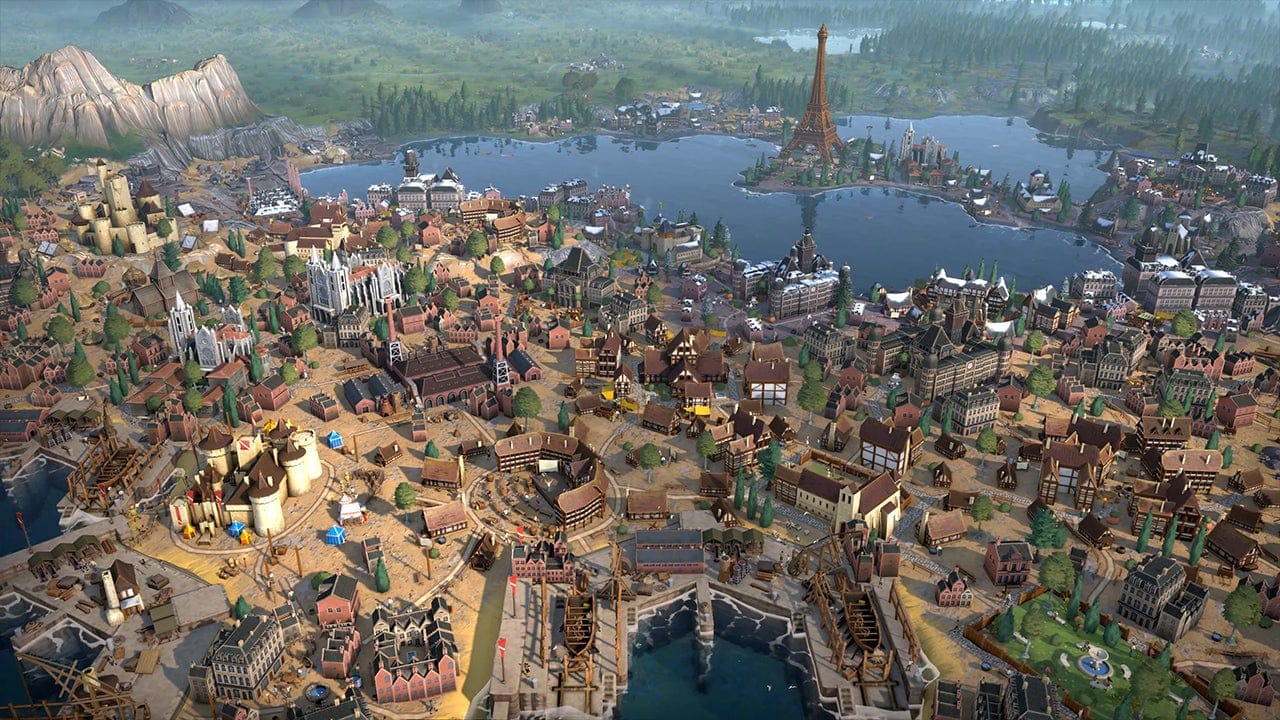
Visually, the game offers a familiar yet compelling 4X experience. Cities sprawl across the map in an “unpacked” model, dominating vast regions, though the developers assure players there will be incentives to keep some areas wild and rural. This choice between urban expansion and natural preservation adds a layer of thoughtful strategy to the endgame.
Assembling a unique legacy from myriad cultural influences while retaining a core identity proves to be a shrewd solution to the long-standing debate between monolithic cultures and culture-switching. By integrating dynamic environmental shifts and deep cultural customization, Humankind 2 promises to deliver a dynamic and memorable historical experience. Set for release on PC in 2027, the game looks set to redefine how we perceive the passage of time and the construction of civilization.
Buy on Amazon
Credit
