Kill PS2 jitters with an affordable upscaler
The Retro Dilemma: Mastering Up-Scaling for PS2 Nostalgia
For many of us who cherish classic gaming, there’s an eternal struggle: how do you bring those iconic 2000s titles to life on modern high-resolution screens? The problem often lies with the hardware itself. While systems like the PlayStation 2 look perfectly fine on older CRT televisions, most consoles rely on interlaced graphics that simply don’t play well with today’s smooth displays. This difference results in jittery visuals that feel jarring and decidedly out of place compared to how we expect high-fidelity games to look.
To bridge this gap, enthusiasts have developed clever hardware solutions aimed at refining the retro image. One popular approach involves using an Open Source Scan Converter (OSSC), which operates by acting as a line doubler, multiplying horizontal pixel rows to boost resolution. This method is lauded for its minimal latency because it processes visuals line by line, mimicking the behavior of an old CRT monitor.
However, even these innovative tools have their quirks. While OSSC excels at reducing lag, its traditional Bob deinterlacing techniques often fail to eliminate the frustrating flicker and jitter that plague interlaced signals. The process of weaving horizontal lines together, while achieving smoothness, can inadvertently emphasize the imperfections inherent in the signal.
A different approach focuses on motion-adaptive deinterlacing, a technique designed specifically to address movement artifacts. This method actively detects if pixels are changing and applies adjustments only where necessary. It attempts to harness the sharpness of traditional methods while ditching the jitter associated with simple frame reconstruction.
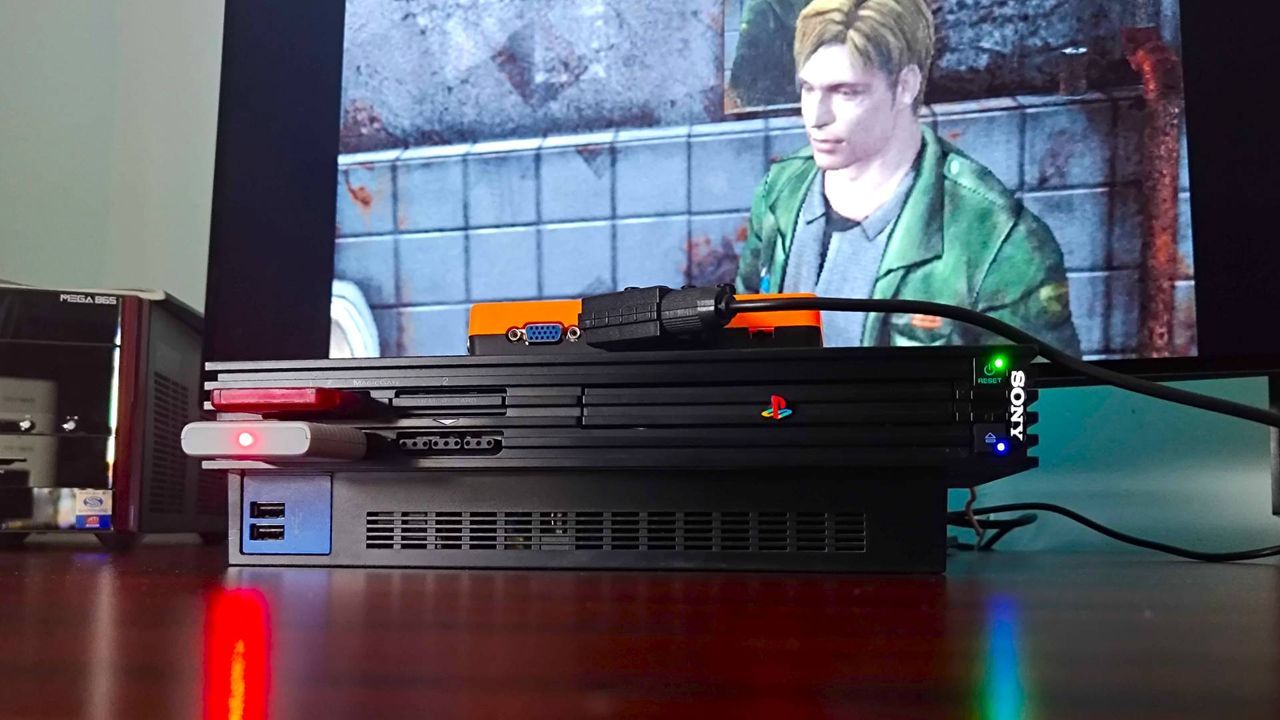
This is where specialized tools shine. For instance, an open-source HDMI converter like the GBS Control (GBS-C) offers a specific superpower for PS2 gaming. Unlike some competitors, the GBS-C can apply motion-adaptive techniques to interlaced signals. This allows it to manage areas with fast motion smoothly while keeping static elements sharp, providing a superior experience for games like Silent Hill 2, where static textures often become noticeably shaky.
The visual outcome depends heavily on the technique employed. While line doubling offers a certain sharpness by simply multiplying pixels, motion-adaptive upscaling provides a much smoother, artifact-free result for dynamic gameplay. The GBS-C demonstrates this advantage when dealing with complex PS2 visuals, proving that specialized algorithms can truly refine retro graphics.
Ultimately, choosing the right solution is a balancing act between performance and budget. While some enthusiasts explore combining different upscalers, the ultimate visual punch often comes from enthusiast-grade hardware utilizing FPGA chips. These high-end options offer flawless motion-adaptive upscaling with zero latency and incredibly sharp visuals, though they come with a significant price tag.
For those on a tighter budget, solutions like the GBS-C provide a genuinely superior PS2 experience compared to relying on native TV settings or cheaper converters. They deliver targeted improvements for interlaced graphics, allowing retro gamers to fully immerse themselves in their favorite worlds without sacrificing image quality.
To see some of these results in action, check out the best retro controllers for authentic gamepads with modern perks.
Buy on Amazon
Credit