Master destroys my free time in Order of the Sinking Star
The Art of the Impossible Leap: Solving the Puzzle of the Sinking Star
There are moments in life when the simplest tasks transform into epic challenges. For some, those moments arrive hidden within complex narratives, demanding not just logic, but a leap of imagination. This is the kind of challenge that tests the limits of perception, and recently, we witnessed a masterclass in strategic thinking as a seemingly impossible puzzle unfolded before the solver.
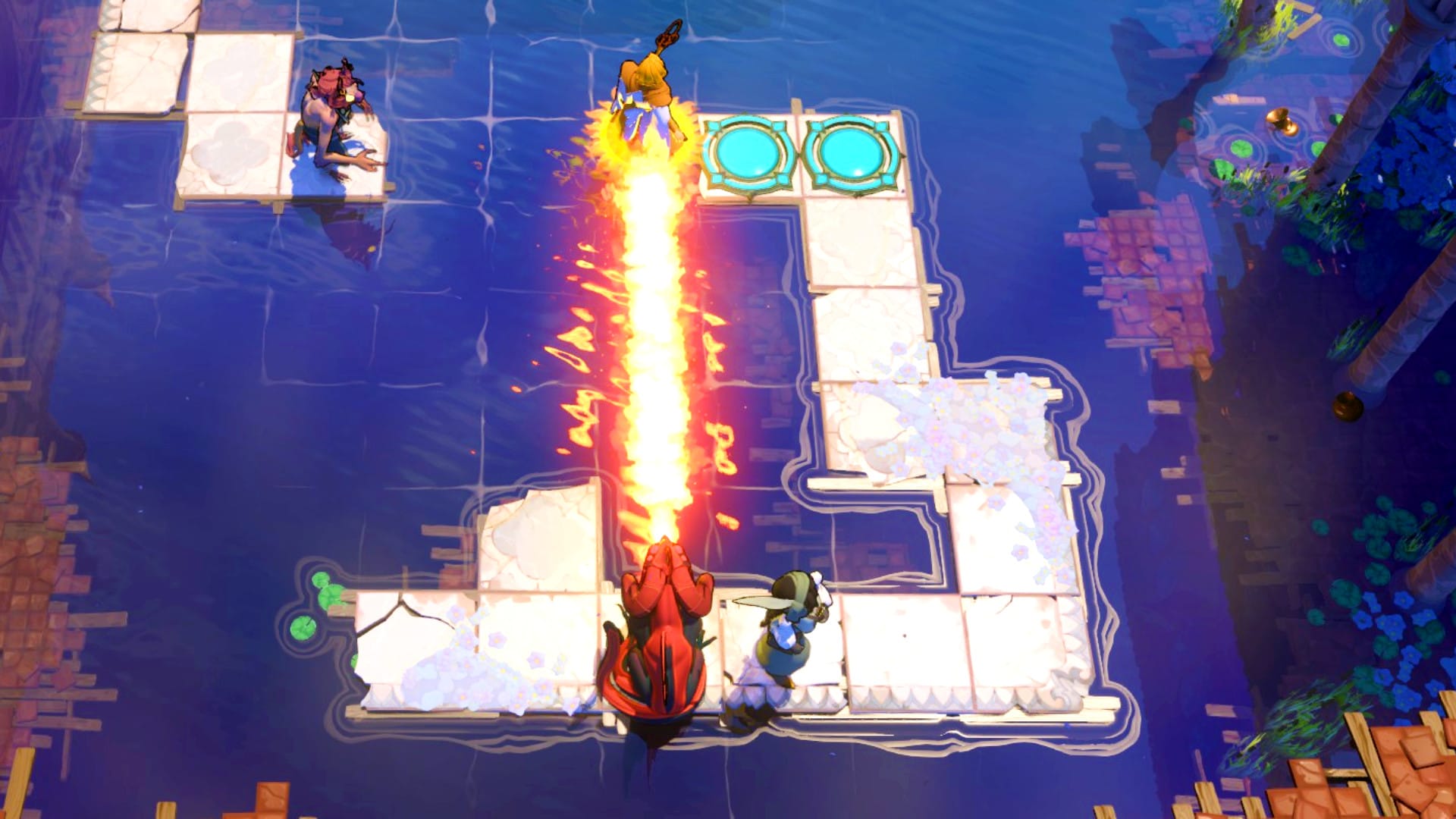
The scenario placed our protagonist in a precarious position, facing a seemingly insurmountable barrier. The goal was clear: three distinct figures, representing the heroes of the Order of the Sinking Star, needed to stand on the far side of a formidable gap simultaneously. The visual setup was daunting, the physical constraint rigid, and the possibility of failure seemed imminent.
It is often true that the path to resolution is not found in brute force, but in reframing the problem. The initial temptation is to focus on the individual crossings, to manage each hero’s journey separately, but this approach quickly reveals its limitations. The true key, as often happens in these kinds of intricate scenarios, lies in understanding the spatial relationship between the elements, not just the characters themselves.
After what felt like an eternity spent staring at the complex arrangement, the solution began to crystallize. The realization hit with the satisfying click of a perfectly aligned mechanism: the solution required a subtle manipulation of the constraints, exploiting the geometry of the setup rather than fighting against it.
The initial difficulty was in grasping the necessary spatial maneuver—how could three distinct entities occupy a single destination without violating the boundary conditions? The answer, however, was elegantly simple once the perspective shifted. It involved recognizing that the gap was not a single obstacle, but a corridor that could be utilized by the heroes in a coordinated sequence.
Getting two of the heroes across proved surprisingly swift once the conceptual hurdle was cleared. The time spent agonizing over the mechanics evaporated, replaced by the exhilaration of seeing the logical pathway unfold. The final step, the simultaneous achievement of the objective, felt less like an end to a struggle and more like the successful completion of a perfectly choreographed sequence.
This experience reminds us that true ingenuity is not about possessing infinite resources, but about possessing the insight to see the hidden connections within the framework we are given. It is a powerful reminder that sometimes, the most complex puzzles yield to the most intuitive leaps.
Buy on Amazon
Credit
