Minecraft beats itself after 2 billion years
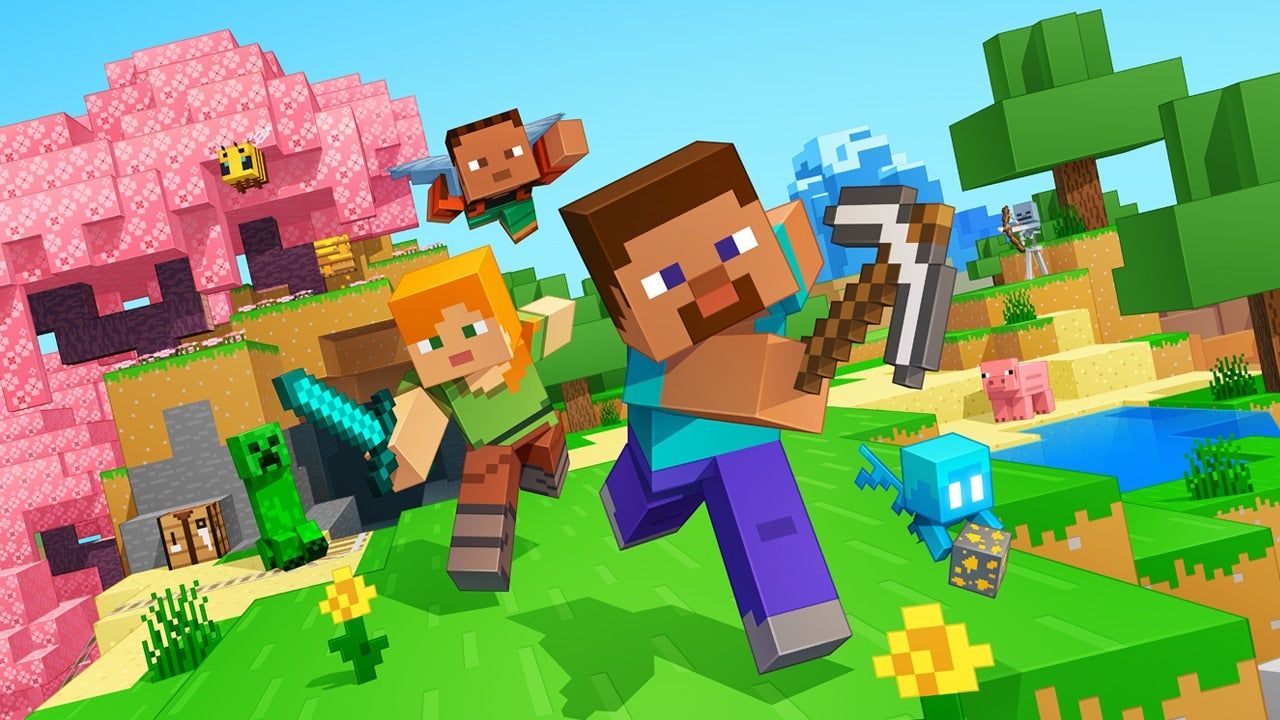
What happens when you put an endless digital world into a scenario of unimaginable duration? The answer might surprise you: if you give it enough time, even the most complex systems can achieve the impossible. This is the mind-bending reality discovered by simulation enthusiast RedLogic, who dared to ask the question: can the game of Minecraft beat itself?
To tackle this colossal challenge, RedLogic didn’t rely on real-time observation. Instead, he constructed a custom simulation, leveraging a Monte Carlo method to compress billions of game ticks into explicitly sampled waiting times. This allowed him to track rare events and the physical resources needed to advance or destroy the unfolding chain of events, effectively compressing two billion years into a manageable timeline.
But simply stretching the time wasn’t enough. For the simulation to work, the world itself needed the right ingredients. RedLogic spent considerable time running further simulations to find the perfect starting world—one with the optimal distribution of resources and, crucially, a naturally occurring ender portal. Without this specific setup, the great digital quest simply couldn’t begin.
Once the perfect environment was established, the simulation was unleashed. The resulting journey was not a swift, dramatic affair, but a slow, glacial crawl. The endermen took their time, waiting tens of thousands, or even millions, of years between major milestones. The process of finding the path to the dragon’s realm took an astonishing 35,510 years alone.
The actual campaign was a monumental waiting game. After the portal was found, the chain of events relied on random chance and the unpredictable behavior of in-game entities. After three million years of waiting, a simple Snow Golem shot a projectile, destroying one of the End Crystals. The ensuing sequence involved repeating that event nine times, punctuated by creepers exploding to inflict the necessary damage on the dragon. The entire, epic struggle to destroy the dragon ultimately took a staggering 1.97 billion years to complete.
While it is certainly much faster for a player to jump in and end the conflict, the fact that this outcome was mathematically possible demonstrates something profound about the endurance of the game itself. It proves that even in a closed digital universe, complexity and consequence can unfold over unimaginable stretches of time.
This experiment serves as a powerful testament not only to the ingenious design of Minecraft but also to the boundless possibilities hidden within its structure. It suggests that anything, no matter how complex or seemingly impossible, is ultimately achievable.
Buy on Amazon
Credit
