Nolan’s Theory: Why Agamemnon’s face is missing in The Odyssey
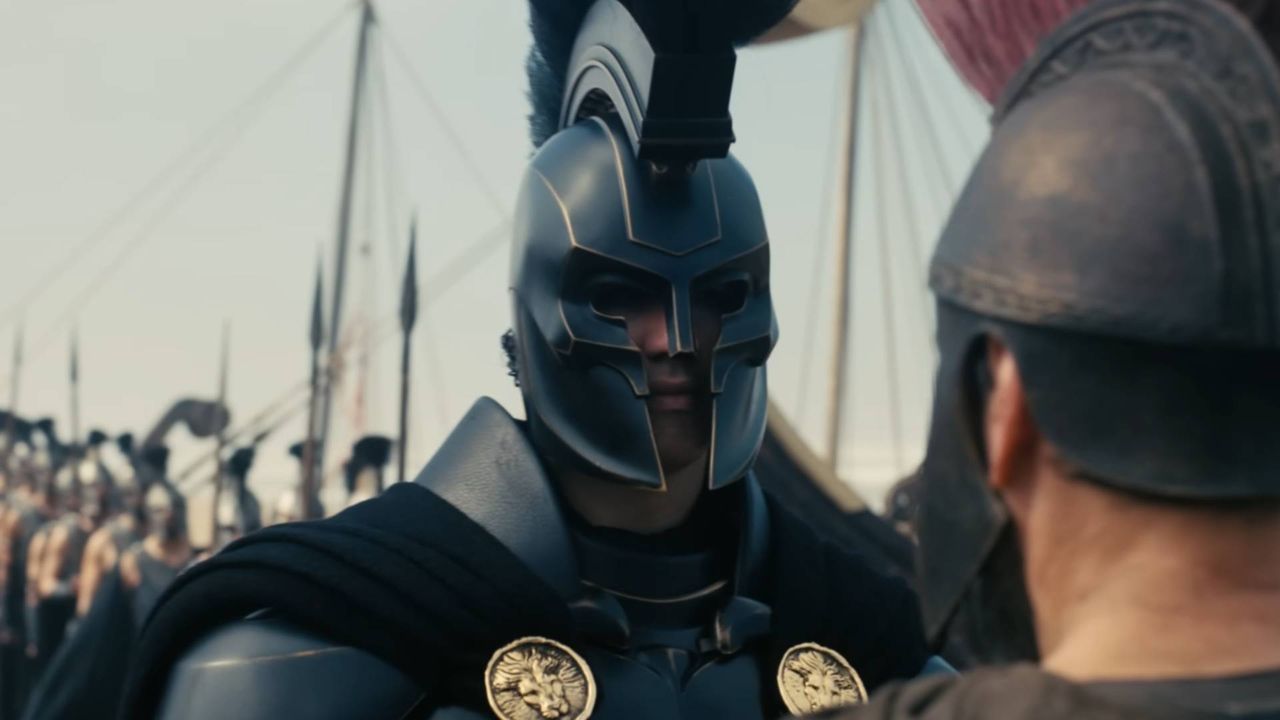
Christopher Nolan’s adaptation of Homer’s epic, The Odyssey, has landed in cinemas, presenting a visual spectacle that immediately commands attention. While the film keeps the main character, Agamemnon, largely obscured, the king’s commanding aura and exaggerated armor have struck moviegoers as particularly compelling. But behind this striking exterior, a fascinating theory has emerged among fans about the symbolism woven into his design.
One popular interpretation suggests that Agamemnon’s massive armor is deliberately oversized, serving to amplify his ego and fearsomeness. This visual exaggeration paints him not just as a warrior, but as a figure defined by immense pride—a hidden-faced leader who, in the context of the epic, ultimately sacrifices men and even his own children without needing to wield a weapon himself.
Adding another layer to this symbolic analysis is the helmet’s distinctive detail: a gold spinal cord running down the back. When first revealed on the poster, this feature threw many viewers off balance, but it offers profound insight into the character’s nature. This polished, gold-plated spine, which Agamemnon does not physically possess, is seen as a brilliant visual representation of universal leaders who pursue war and power for reasons that ultimately prove hollow.
This symbolic layering invites deeper reflection on perception. Some speculate that Nolan’s depiction of the king reflects his internal psychological journey rather than a literal portrait. Since much of the narrative unfolds from Odysseus’s point of view, it is possible that Agamemnon’s manifestation is less about physical reality and more about how he has been processing years of conflict and war.
This interpretation connects seamlessly with the historical context of the epic. Just before Agamemnon sets off for Troy, Odysseus warns Penelope that if he delays his departure, Agamemnon will kill their son, effectively depicting him as a monster. This suggests a complex interplay between the mythological narrative and the psychological weight carried by the characters.
The journey through The Odyssey is inherently about the twisting nature of fact. While Homer presents Odysseus in a glorious light, the film’s focus allows for subtler, more painful truths. For instance, some readers wonder if elements of the narrative concerning Odysseus and Circe were omitted, reflecting a truth Odysseus chose to hide. This omission speaks to the painful realization that even the greatest heroes must navigate deceit.
Ultimately, The Odyssey reminds us that the glory we see is often filtered through perspective. As viewers experience the epic, we understand how our own memories and biases distort the truth. It’s this interplay—between the grand visual spectacle of Nolan’s vision and the hidden emotional realities within the myth—that makes the story resonate so powerfully.
Buy on Amazon
Credit