Onimusha: Sword Action Review
The Immortal Dance: Why Onimusha Remains a Masterpiece of Action and Emotion
There are games that simply demand your attention, and then there are those that rearrange your perception of what video games can be. <Onimusha: Way of the Sword> falls firmly into the latter category. It is more than just a collection of sword fights; it is an immersive journey into a world where ancient legend collides with demonic power, driven by a character whose pursuit of perfection defines the very essence of action.
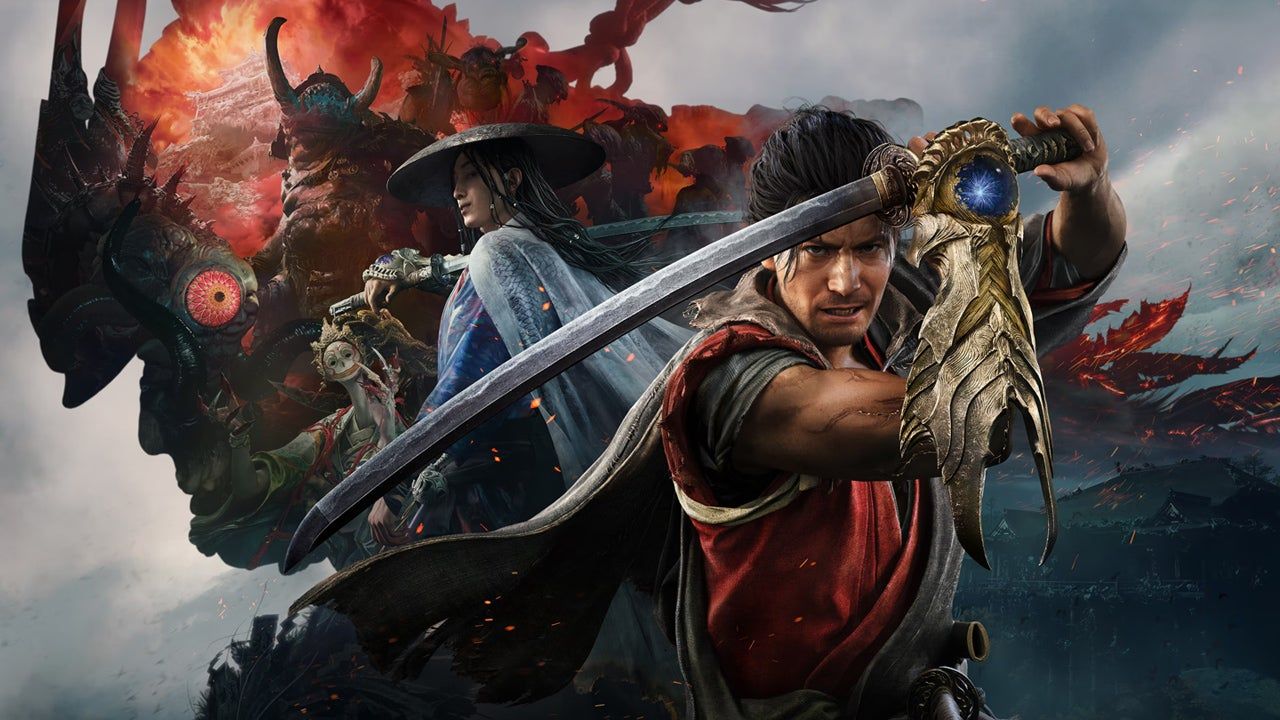
At the core of the narrative is Miyamoto Musashi, a figure steeped in the mythology of the samurai. But this is not a simple historical tale. <Onimusha> is a masterclass in loose historical fiction, weaving together the lives of real samurai—Musashi and his rival Sasaki Ganryu—into a fantastical epic. Their world is shattered when monstrous entities known as Genma attack them, forcing Musashi into an extraordinary ordeal that redefines the meaning of strength and destiny.
A strange man in hell intervenes, granting Musashi the power of an Oni gauntlet, an artifact capable of absorbing the souls of fallen foes. This power is tied to a woman named Shizuka, whose spirit is bound within the gauntlet. Imbued with this power, Musashi joins forces with Onimusha Takamura and his assistant Okuni to guard the Oni Gate, a perilous boundary separating the mortal world from the realms of hell and the corrupting Malice that twists the land.
The true brilliance of the game lies not just in its epic scope, but in its character-driven narrative. Musashi is not a born hero; he is driven by a powerful sense of self-doubt and a yearning to prove himself. He wrestles with the power he has gained, seeking not just victory, but true mastery over his skills. This internal conflict, coupled with his swaggering yet complex personality, makes him instantly compelling.
The emotional core of <Onimusha> is beautifully realized through the relationships the characters forge. Watching Musashi evolve from a proud swordsman to a mentor, finding kinship with Takamura and Okuni, provides a deeply satisfying emotional arc. His bond with Shizuka, the embodiment of the gauntlet’s spirit, deepens the story, demonstrating that true power is found not in isolation, but in shared experience.
The visual storytelling is equally breathtaking. The facial animations sell every nuance of emotion, giving the characters a vibrant, breathing life that elevates the experience beyond mere mechanics. Furthermore, the game brilliantly captures the essence of its legendary inspiration, translating the mannerisms of actors like Toishiro Mifune into tangible game movement, making every clash feel uniquely personal.
Beyond the character drama, the action system is where <Onimusha> truly shines. The combat is a kinetic ballet, demanding precision, instinct, and flow. Mastering the art of the Issen counterattack—a lightning-fast sidestep that results in devastating blows—alongside masterful parries and deflects, creates a combat system that feels less like button-mashing and more like an intuitive dance between light and shadow.
Players are constantly challenged to manage resources, using souls to heal and upgrade their abilities, forcing strategic engagement in every fight. This strategic depth, combined with the ability to unleash chain combos and execute powerful specialized moves, transforms combat into a dynamic puzzle where timing and strategy are paramount to survival.
The world itself rewards exploration. While the main narrative unfolds with epic boss battles, the optional content offers a rich tapestry of discovery. Hidden temples, remote mountains, and forgotten areas invite players to explore, uncovering secrets and acquiring powerful upgrades that refine Musashi’s gear and augment his abilities. These side quests, often narrated by evocative stories, provide layers of lore and reward players with treasures that enrich the world of Kyoto.
Ultimately, <Onimusha: Way of the Sword> is a triumph because it successfully marries a high-octane action experience with profound emotional depth and meticulously crafted world-building. It is a game that doesn’t just ask you to fight; it invites you to live the fluid, thrilling existence of an immortal warrior, leaving behind a legacy defined by perfect movement and unforgettable character relationships.
Buy on Amazon
Credit