Satisfactory Board Game Preview
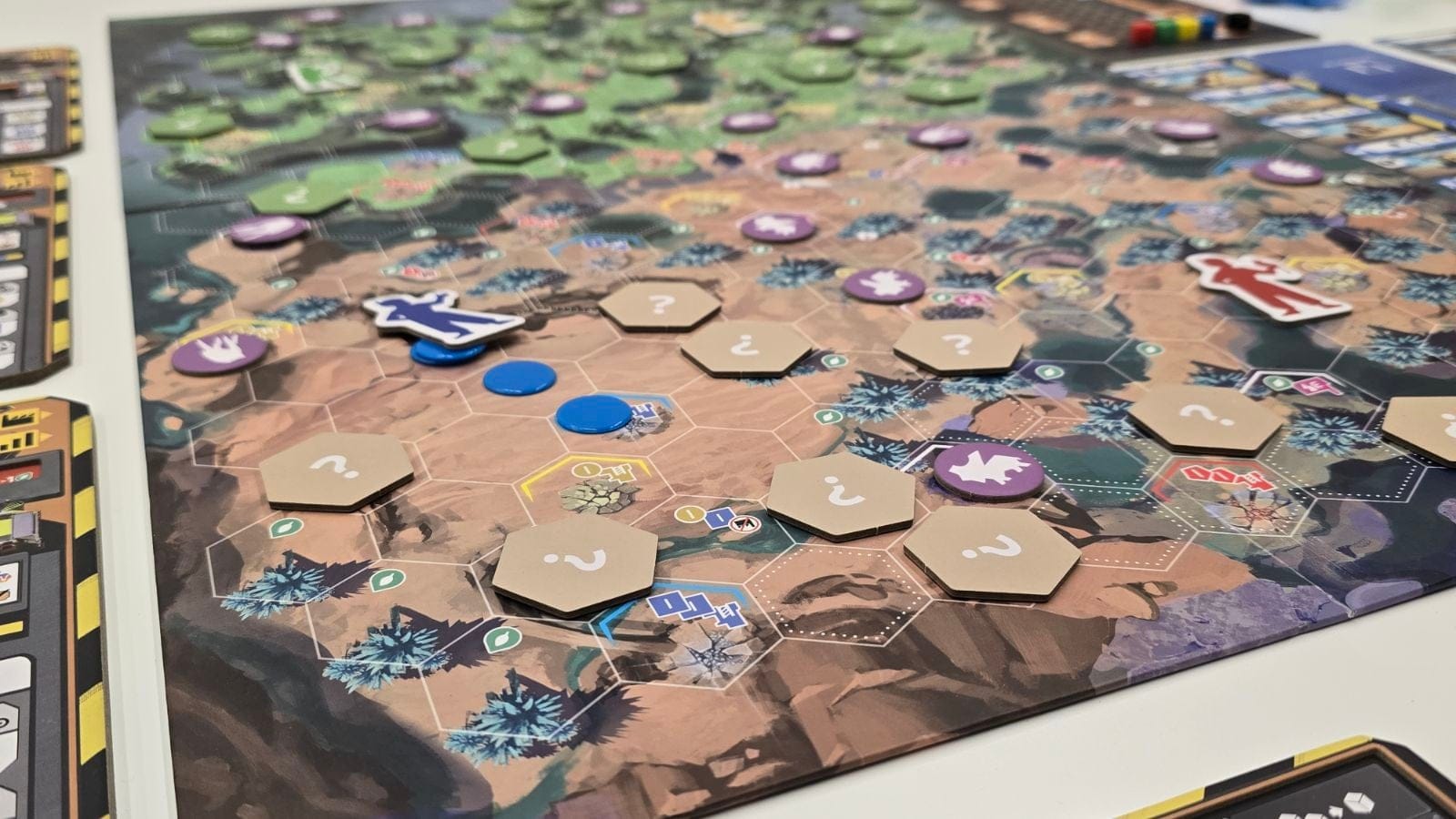
The digital world of factory-building games has captivated players for years, with titles like Satisfactory offering sprawling conveyor belts and massive automated structures that demand efficiency and scale. Now, the dream of building an industrial empire is moving from the screen to the tabletop, thanks to Mood Publishing’s adaptation: Satisfactory: The Board Game.
This exciting transition takes the complex, satisfying logistics of the PC experience and shrinks it down to a kitchen-table-sized challenge for players. Designed by David Thor Fjalarsson, the board game invites up to four players to compete in a race to build the most efficient industrial network before the space elevator is complete.
The core gameplay revolves around mining, refining, and upgrading your factory. Players must strategically manage resources and expand their footprint across a hex-grid map populated with random biomes and resource-rich points. On their turn, players decide their fate by choosing between building new structures, moving across the map, or initiating the production phase where resources are gathered and refined.
The turn structure is deceptively simple: a loop of action, production, and repetition. Players leverage actions to expand their operations, utilizing specialized structures like extractors and refineries to feed an ever-growing industrial machine. This cycle perfectly mirrors the addictive flow of the original game, demanding constant optimization to maximize FICSIT points.
The real fun emerges when players start stringing together the various bonuses. Building a miner, for instance, grants you immediate access to a conveyor belt or an extra movement action, allowing for dynamic, unpredictable turns. It is this system of cascading bonuses that transforms simple resource gathering into a puzzle of spatial and logistical brilliance.
While the game is structured as a competitive race for points, the interaction is far from a battlefield. Players are not fighting over territory; instead, they cleverly maneuver to block opponents’ expansion or strategically place their infrastructure to gain an edge. The dynamic changes significantly depending on the number of participants. With just two players, the focus shifts almost entirely to intense optimization and internal system planning. However, when four players are involved, the game turns into a nuanced negotiation of space and resource contention.
The physical experience of the game is also part of the appeal. Satisfactory is inherently a large-scale experience, and the tabletop version brings that imposing scale to life. Laying out the many icons, cards, and resource tokens demands considerable table space, making the experience surprisingly immersive—and sometimes overwhelming.
Despite the visual density, the design manages to distill the essence of the original game: building an efficient system and riding that system to new heights. The adaptation successfully captures the feeling of expanding a complex network, proving that even the most sprawling digital worlds can translate into a compelling, tactile board game experience.
Buy on Amazon
Credit
