Steam User Mourns ‘Red Line of Death’ Before PC Works
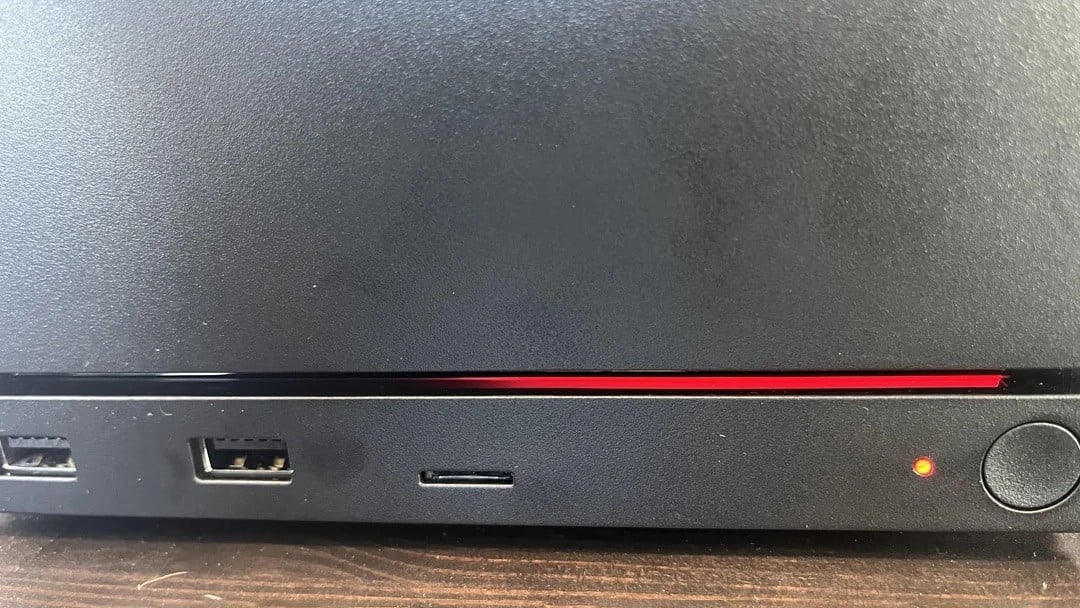
Tech troubleshooting often feels like navigating a labyrinth of cryptic error codes and obscure technical jargon. But sometimes, the fix to the most frustrating machine failures lies in the simplest, most counterintuitive steps.
Recently, a user grappling with an inoperable Steam Machine found a surprisingly elegant solution after reaching out for assistance. The journey to getting the system back online involved more than just standard diagnostics; it required an unexpected intervention from the source itself.
When seeking help on online forums, this user encountered confusing lightbar codes that pointed toward deeper system issues. It was in this moment of frustration that a representative from Valve stepped in, offering advice that proved to be the key to unlocking the machine’s potential much faster than traditional troubleshooting methods.
The core of the discovery was a subtle but significant reversal in how the error messages were presented. The lightbar codes displayed by the system were flipped: the code meant to signal a GPU failure was actually indicating that the memory training failed.
This seemingly arbitrary reversal explained why leaving the machine unplugged and then restarting it solved the problem. The simple act of clearing the CMOS—a process achieved by removing power—resetting the system’s internal state, and booting it up again miraculously corrected the fault.
It’s a classic example of how sometimes, the simplest explanation is the most profound. While this workaround provided immediate relief to the user, it also highlighted a gap: the official Valve support documentation did not appear to reflect this crucial reversal in error code logic.
This incident serves as a reminder that even in highly technical systems, the solutions can be hidden in plain sight, waiting for someone to look past the standard instructions and observe the subtle details of how the technology actually communicates its distress.
Buy on Amazon
Credit