Stunning Shot The Odyssey from Nolan’s Final Movie
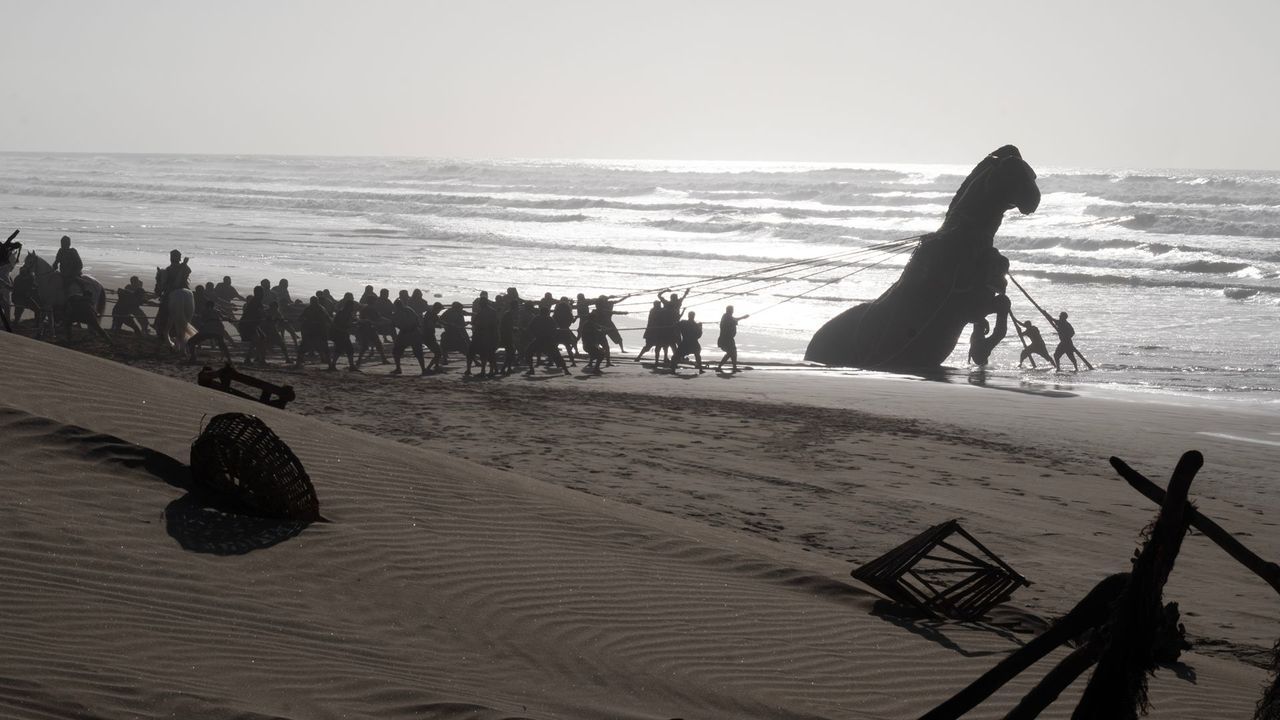
Christopher Nolan’s epic journey, The Odyssey, has captivated audiences with its cinematic scope, particularly those who experienced it on the expansive canvas of IMAX. While many fans are celebrating the film’s release, a subtle question lingers among movie lovers: what spectacular shot was omitted from the final cut?
During the initial trailer, the movie teased a visually arresting sequence depicting the Trojan horse being dragged out of the sea by soldiers on the sands of Troy. This specific moment, featuring a lone soldier watching the sunset over the water, was a highlight for many viewers and generated immediate curiosity among those who followed Nolan’s visual storytelling.
Yet, when the final film landed in theaters, this seemingly breathtaking image vanished. A keen eye among the fanbase immediately noticed its absence, prompting speculation about why such a compelling scene was edited out. Some theorized that it was removed because the shot was less tangible and more painterly, feeling somewhat disconnected from the gritty reality of the film’s world.
Others suggested a simpler explanation: the visual element simply did not serve the narrative arc. The fundamental question became whether the moment was essential to advancing the story or if its absence served a greater purpose.
The real answer, however, lay not in artistic preference but in the practicalities of filmmaking itself. To ensure that Nolan could deliver his vision within specific technical parameters, there were strict limitations on the film’s length. If The Odyssey had extended beyond a certain runtime, it would have necessitated an entire rebuild of the IMAX projection system.
Speaking about the demands of the production, Nolan revealed that he instructed his editor, Jennifer Lame, to be extremely strict during the cutting room process. His philosophy is clear: “If it doesn’t serve the story, it has to go.” He emphasized that artistic choices are not solely dictated by camera or format, but by narrative necessity.
This decision underscores a fascinating tension in cinema—the struggle between pure aesthetic vision and the practical constraints of physical production. It highlights that even the most visually stunning moments must ultimately bow to the demands of the story they are meant to tell.
Buy on Amazon
Credit