Surrounded by Bees: Himesh Patel on Nolan’s Cyclops Scene
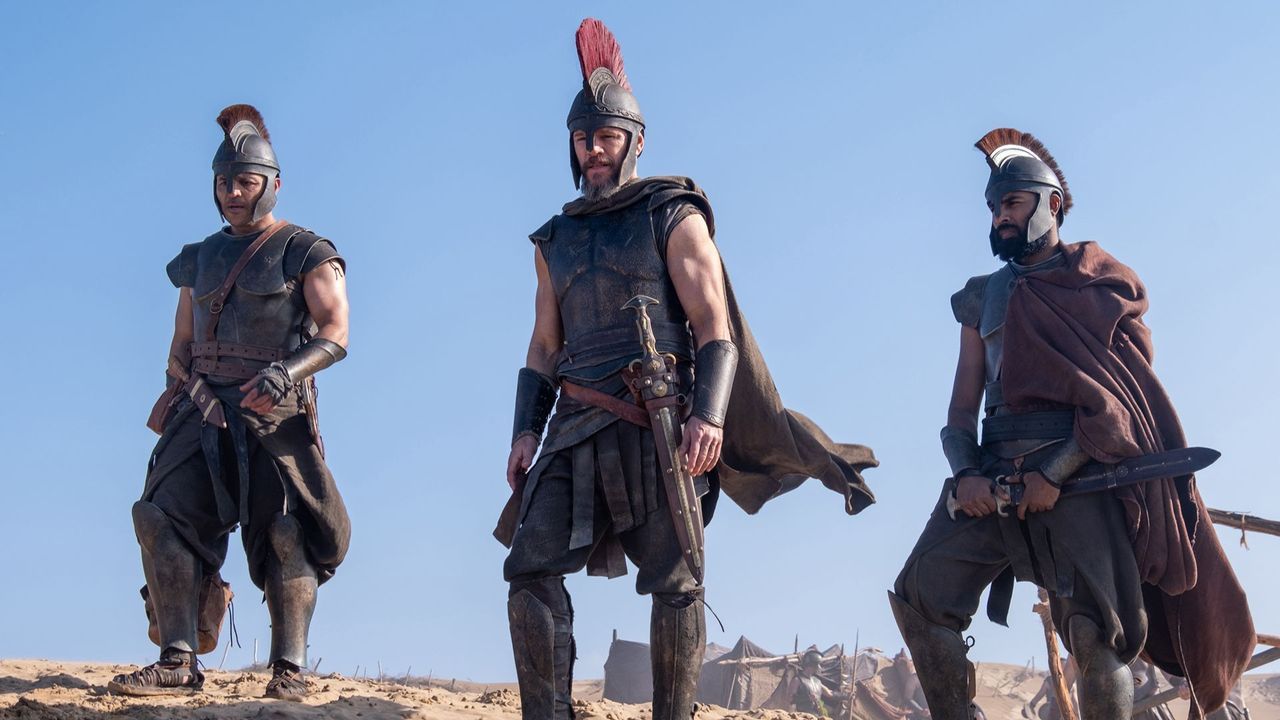
Bringing Homer’s epic to life on the big screen often requires more than just grand vision; it demands genuine peril and meticulous execution. The production of Christopher Nolan’s The Odyssey was no exception, involving actors and crews who faced real dangers while attempting to capture the visceral reality of ancient myth.
For Himesh Patel, who portrayed Odysseus’ second-in-command Eurylochus, this sense of jeopardy only amplified his performance. He shared that working with director Christopher Nolan provided a unique foundation for capturing the raw experience of the voyage and the harrowing moments faced by the crew.
“It adds a sort of visceral quality to it, which you see on screen that you don’t really see that often,” Patel recounted. “He trusts we have a certain level of common sense to keep ourselves safe, but also that he’s got the best stunt teams around, the best marine teams around, that kept us safe and kept us from ever being in any real danger.”
Patel elaborated on how this professional safety net allowed him to focus entirely on the emotional truth of the scenes. He spoke about capturing the authentic feeling of being on a perilous boat or within ancient settings.
This dedication to reality extended even to the smallest, most unexpected details. During the dramatic sequence involving the crew escaping the Cyclops’ cave, a simple natural occurrence provided an unforgettable soundtrack. While everyone was focused on the action, the sound team captured the low buzz of bees that occurred naturally outside the cave.
“When we broke for lunch and they were like, ‘Just wait five minutes,’ the sound team captured the sound of the bees. Sometimes you have these beautiful accidents,” Patel noted, highlighting how such serendipity contributes to a genuinely authentic experience.
The physical setting itself was equally evocative. Filming took place in Nestor’s Cave in Greece, an area historically known as the “birthplace of Zeus.” Upon arrival, Patel reflected on the transformation required to make this ancient landscape serve the film’s narrative goals.
“We basically turned it into a soundstage,” he recalled. “They’d found a tiny gap at the top where they could run some cables in, and basically harness a rig of lighting. It was just kind of amazing to be going there and reminding ourselves that we’re in an actual cave, we look outside and there’s actually the Mediterranean around us.”
The process showcased how technical ingenuity blends seamlessly with mythology. The resulting experience delivered not only the epic scale of Greek storytelling but also a palpable sense of physical reality, proving that some of the most compelling cinema arises from embracing genuine, unexpected moments.
Buy on Amazon
Credit