Tiny E-ink Game Boy docks to NES controller for gaming
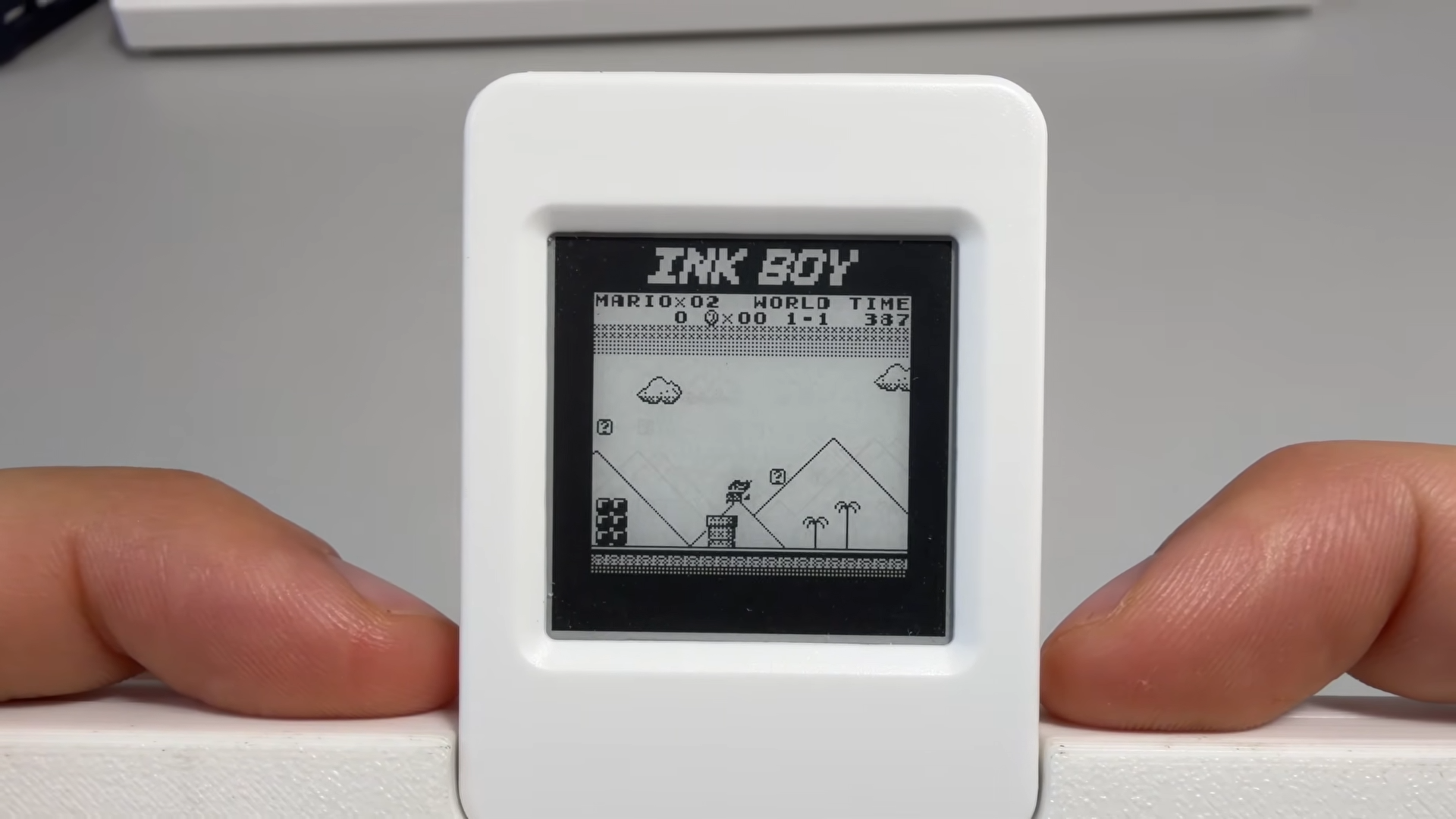
The Ink-Boy: How a Tiny Microcontroller is Revolutionizing Retro Handhelds
While playing Game Boy games on an E-ink display might sound like a niche concept, the innovation behind handheld retro gaming is far from new. A clever modder has turned a simple ESP32 microcontroller into a portable powerhouse, paving the way for a new generation of paper-screen handhelds.
This project, known as the Ink-Boy, isn’t just about slapping an old screen onto a chip; it’s a deep dive into display technology. The creator, Bo Made It, developed a custom display driver that addresses the inherent limitations of E-ink, pushing visuals out at a smooth 30 frames per second. This high refresh rate tackles the typical stuttering and ghosting issues that plague older portable displays.
The secret to achieving this fluid motion lies in a unique workaround. Instead of relying on standard display methods, the modder ingeniously adjusted the waveform sequence used to set pixels to black. This trick dramatically reduces E-ink artifacts, resulting in motion that looks significantly smoother and closer to the authentic look of an original Game Boy screen.
The foundation for this achievement was inspired by existing paper-screen technology, specifically the Paperboy S3. By adapting those principles, the Ink-Boy manages to deliver playable visuals while navigating the complexities of E-ink’s material properties. Although the 200×200 resolution is smaller than some competitors, the creator utilized the natural way E-ink changes pixels to cleverly spoof additional greyscale pixels, effectively producing a four-bit “color” on demand.
The resulting handheld is compact and highly customizable. Built around a 1.54-inch E-ink screen, the Ink-Boy leaves plenty of room for creative design, and the modder opted for a fully dockable USB-C controller, integrating seamlessly with retro console setups.
Furthermore, the Ink-Boy isn’t just a static display device; it’s ready for modern connectivity. It supports Bluetooth, allowing users to connect external controllers, such as the CKRD Atom Plus, turning the small setup into a powerful retro gaming station. This focus on connectivity suggests a vibrant future for portable retro experiences.
Projects like the Ink-Boy highlight the power of community and DIY engineering. While modern LCD options abound, embracing the unique possibilities of E-ink demonstrates a commitment to bringing back non-backlit displays into a genuinely useful and cutting-edge handheld format.
It’s a testament to how pushing the boundaries of hardware and software can lead to genuinely exciting new chapters for retro handheld gaming.
Credit