Tomb Raider Atlantis secrets you can’t ignore
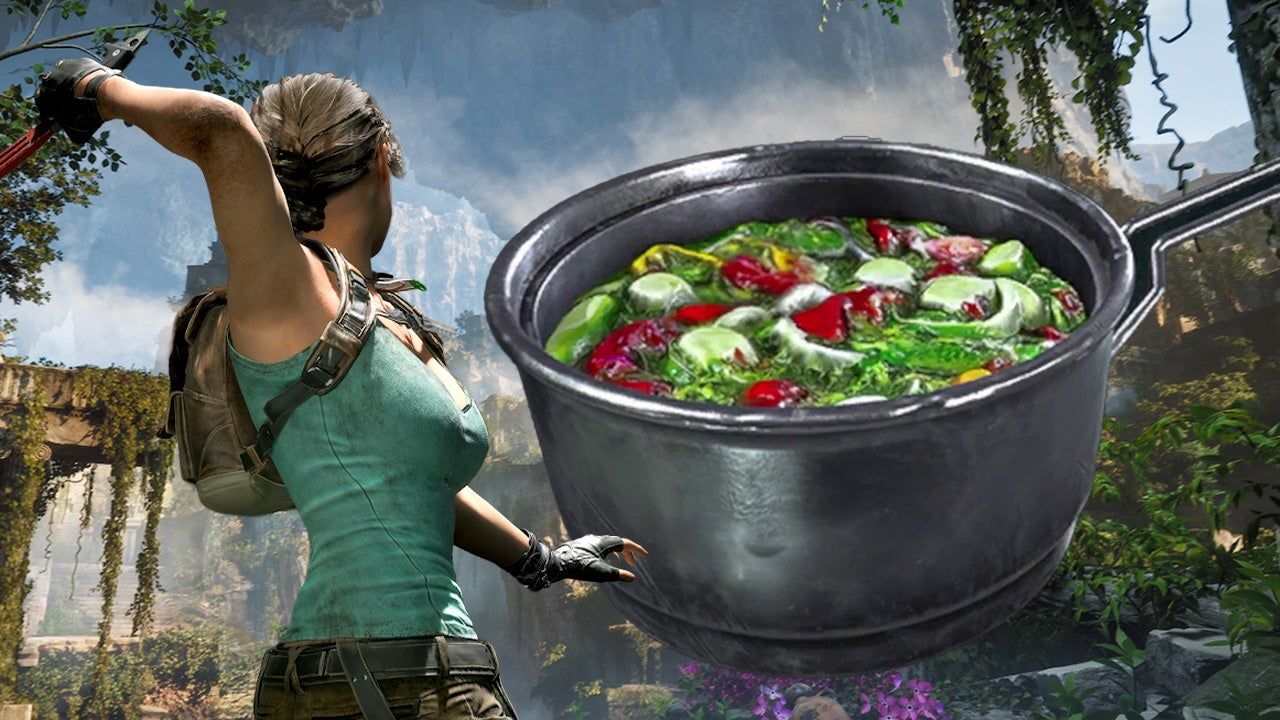
When you first encounter Legacy of Atlantis, the experience is less a game and more a visual feast. Seeing the new Tomb Raider demo on a massive screen reveals a level of visual fidelity that makes the chunky textures of the original seem laughably primitive. It’s an absurdly beautiful reinterpretation of Lara Croft’s legacy, crammed with fine detail that makes you wonder if every particle of dust and ancient artifact is a threat to your airways. The sheer graphical prowess stretches the sense of scale, pulling the viewer into a cavernous, impossibly deep world that feels far more potent than anything possible on older hardware.
The creative vision behind the remake wisely focuses on preservation. Director Raul Siqueira’s philosophy—knowing what to keep and what to change—is evident in how Legacy of Atlantis handles its elements. It respects the foundational aspects of the adventure while delivering a modern, breathtaking aesthetic. This approach successfully blends disparate eras of Lara Croft, creating a unified timeline that is both nostalgic and forward-looking.
The game masterfully reinterprets classic traps, most notably the infamous Damocles Room. Instead of being mere deadly obstacles, the menacing swords are repurposed as dynamic traversal tools. Lara can now perch on their hilts, transforming a terrifying puzzle into an ingenious piece of spatial maneuvering. This shift in mechanics redefines the traversal challenge, rewarding clever movement over brute-force jumping.
This blending of history is where the narrative gets wonderfully complex. The game operates as a nexus point for multiple versions of Lara, weaving together the original adventure, the 2007 timeline, and the Survivor Trilogy. It attempts to feel timeless, but it finds itself navigating a tricky tonal tightrope, balancing playful tropes from Indiana Jones and Bond with the gritty misery of modern survival. The result is a kaleidoscope of eras, each offering a distinct flavour of adventure.
However, this ambitious melding leads to some questionable decisions. The introduction of modern survival mechanics, like crafting and skill trees, feels mechanically out of sync with the narrative. If this version positions Lara as a prime, capable survivor, the need to unlock skills feels redundant, questioning the premise of ‘survival’ itself. Lara, an educated aristocrat, finds herself in a situation that demands meticulous planning, not haphazard winging it on with boiled moss.
The visual and mechanical brilliance is often undercut by some less savory choices in the game’s execution. A notable point of contention is the quality of the in-game assets. While video game food depictions are often treated as art, the meals Lara encounters in Legacy of Atlantis look decidedly unappetizing—more like slop than gourmet fare. This raises immediate questions about the studio’s process, particularly concerning the use of generative AI in development.
The use of generative AI in the development process has stirred controversy within the community. While the studio insists that the final content is human-made and refined, the stark disparity between the high-fidelity graphics and the somewhat lackluster details—especially in elements like food—suggests a troubling association. It highlights a critical point: even a faint involvement with AI can taint a project if the final results are uninspiring.
Despite these mixed signals, the sheer celebration of the entire Tomb Raider lineage is admirable. By treating all previous eras as equally important, the developers are embracing the franchise’s expansive legacy. It is a visual triumph and a bold statement, offering a new, unified journey for fans. Whether the journey is perfectly smooth depends on whether the vision can overcome the mechanical and ethical inconsistencies it introduces.
Buy on Amazon
Credit