Wireless DisplayPort visuals in the Crystal Pro VR headset
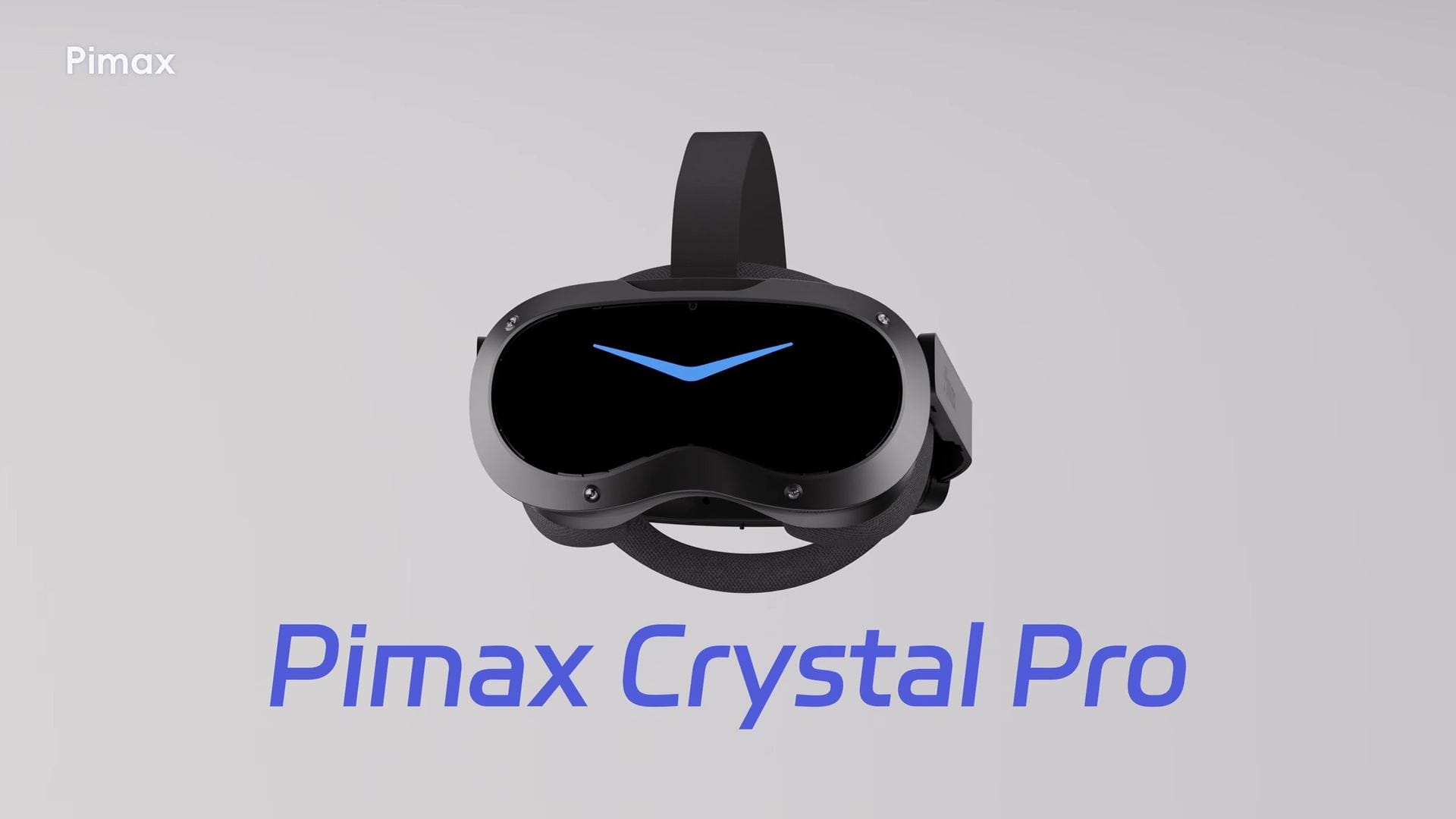
In the increasingly competitive world of extended reality, a heavyweight battle is brewing. High-end brand Pimax is not just playing catch-up; they are setting a bold new course, challenging Valve’s presence in the XR market with a suite of innovative new hardware.
The focus is squarely on the Pimax Crystal Pro, a device designed to capture the appeal of Valve’s Steam Frame while pushing boundaries in wireless performance. This new headset is built around the Snapdragon XR2 Gen 2 processor but is designed with a singular mission: to revolutionize wireless VR by solving the frustrating problem of image compression.
As Japp Grolleman, brand and communications manager at Pimax, notes, the core issue with current wireless headsets is that every frame must be compressed through a codec to transmit data, meaning users pay for that compression. Pimax is determined to eliminate this compromise, asking, “What if it didn’t have to?”
To achieve this lossless experience, the Crystal Pro employs a unique connection system utilizing a dedicated Wi-Fi 6E dongle and a novel 60G AirLink bandwidth—a connection rate that remains unmatched by other systems. To ensure this high-speed connection maintains integrity, the system uses infrared beam aiming, guaranteeing that the signal flows directly to the headset without disruption from physical obstructions.
This commitment to pristine visuals is further enhanced by Pimax’s implementation of “native foveated streaming,” a concept borrowed from Valve’s Steam Frame. By focusing the image precisely where the user is looking—using ten infrared emitters per eye—the system sharpens the image quality exactly where it matters most, delivering incredibly crisp visuals.
Beyond visuals, the design prioritizes comfort and versatility. The Crystal Pro steps away from traditional bulky designs, featuring a separate battery puck that can be worn comfortably in a pocket, similar to the Apple Vision Pro. The headset utilizes aspheric lenses for superior tracking accuracy and wider viewing angles, alongside a magnetic, snapping facial interface for seamless interaction.
The controllers are equally reimagined, offering a ringless design that snaps together to form a full gamepad. This allows for versatile use, turning them into a traditional controller for flat-screen gaming when needed. Tracking is managed by Pimax’s improved SLAM software, which now works flawlessly even in darker environments, and the headset incorporates multiple microphones for clear communication and noise cancellation.
For power users, Pimax is also introducing Spation, a desktop-class mini-PC built specifically for VR and supporting both Windows and SteamOS. This expands the ecosystem, allowing users to integrate their VR experience into a powerful, dedicated gaming setup. The hardware package, including the Crystal Pro, starts at $1,399, with an optional $1,899 package that includes the comprehensive 60G AirLink kit.
Pimax’s vision seems to be one of uncompromising quality, echoing the shared philosophy of admiration that Grolleman expresses for Valve’s groundbreaking work, suggesting that the future of high-fidelity, wireless VR is just around the corner.
Buy on Amazon
Credit
