Gamedev makes 3D possible on the Playdate for Mirror’s Edge levels
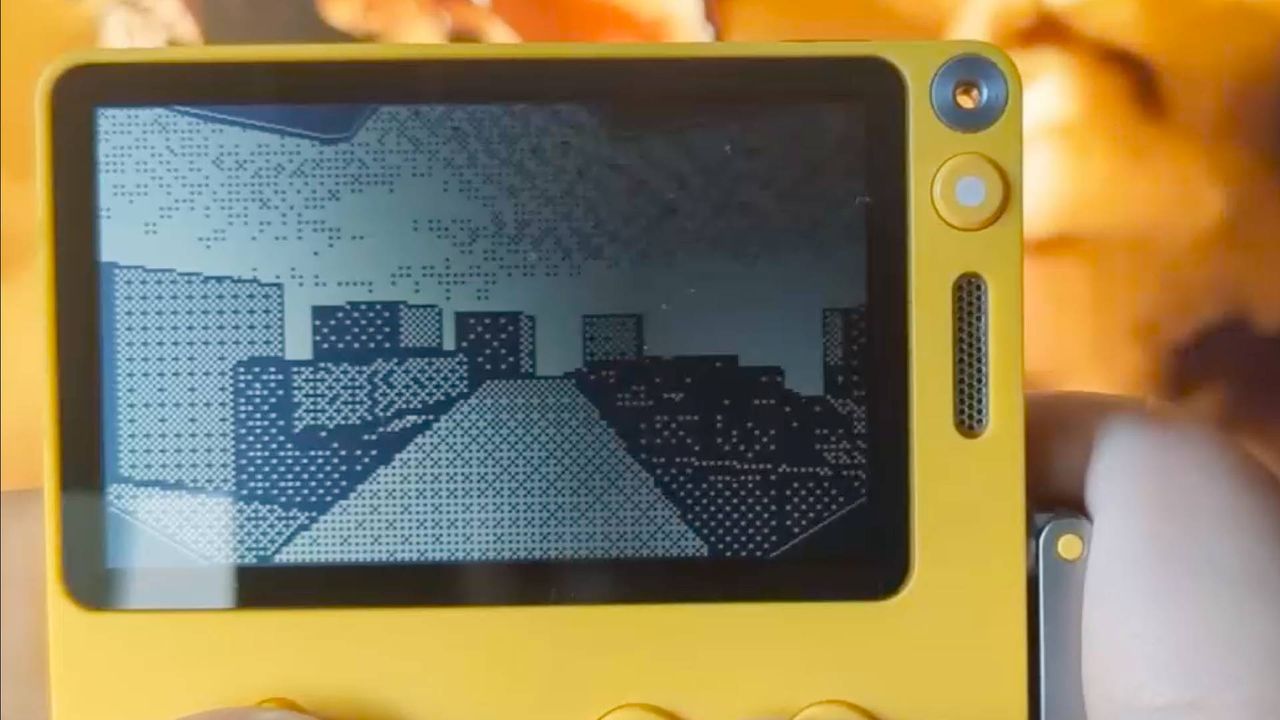
Some limits are meant to be broken. In the world of retro handheld gaming, where hardware specifications often dictate creative boundaries, one developer is proving that the smallest machine can harbor the biggest dreams. This story is about pushing the boundaries of what a device like the Playdate can achieve, and demonstrating that even with minimal resources, true visual magic can be forged.
The Playdate, known for its delightfully low-spec creativity, was never intended to be a powerhouse capable of rendering complex three-dimensional environments. Yet, developer Cristina Ramos decided to ask the impossible question: could she bring 3D platforming, inspired by classics like Mirror’s Edge, to this charming handheld? The answer, she boldly suggested, was no. But the reality, as she demonstrated, was far more exciting.
Ramos tackled this challenge by building her own custom three-dimensional renderer specifically for the Playdate. This wasn’t just a technical exercise; it was an act of defiance against perceived hardware limitations. The result is a stunning vision: first-person exploration games running on retro hardware, featuring landscapes and depth previously thought unattainable on such constrained systems.
Ramos shared her journey in a comprehensive development log, detailing the intricate process of creating this custom graphics engine. It’s a fascinating dive into how three-dimensional graphics work, all powered by the Playdate‘s modest ARM Cortex-M7 chipset and just 16 MB of RAM. While the portable simply cannot compete with the power of modern PCs or even classic consoles like the PS1, the resulting visuals are surprisingly robust, pushing the limits of what’s possible on an older architecture.
The defiance continued when Ramos showcased her work, demonstrating exterior levels inspired by open-world designs. This was proof that seemingly impossible concepts could be realized. She even explored running demanding games, successfully proving that the system could handle titles like DOOM, further cementing its potential beyond simple retro aesthetics.
This experiment led to the creation of her game, Katavatis, a climate-apocalyptic Metroidvania romp that lives up to the promise of visual adventure. The game itself is an invitation to explore abandoned deep-sea facilities in full 1-bit 3D glory.
Now, the focus shifts from raw technical achievement to accessible gameplay. Katavatis is heading to Steam and Itchio, inviting players to experience this unique blend of retro charm and cutting-edge visual ambition. It’s a reminder that sometimes, the most revolutionary experiences are found not in sheer processing power, but in the ingenuity to find new ways to use what you have.
Buy on Amazon
Credit