
Splatoon Raiders: Satisfying Tech Upgrade for Switch 2
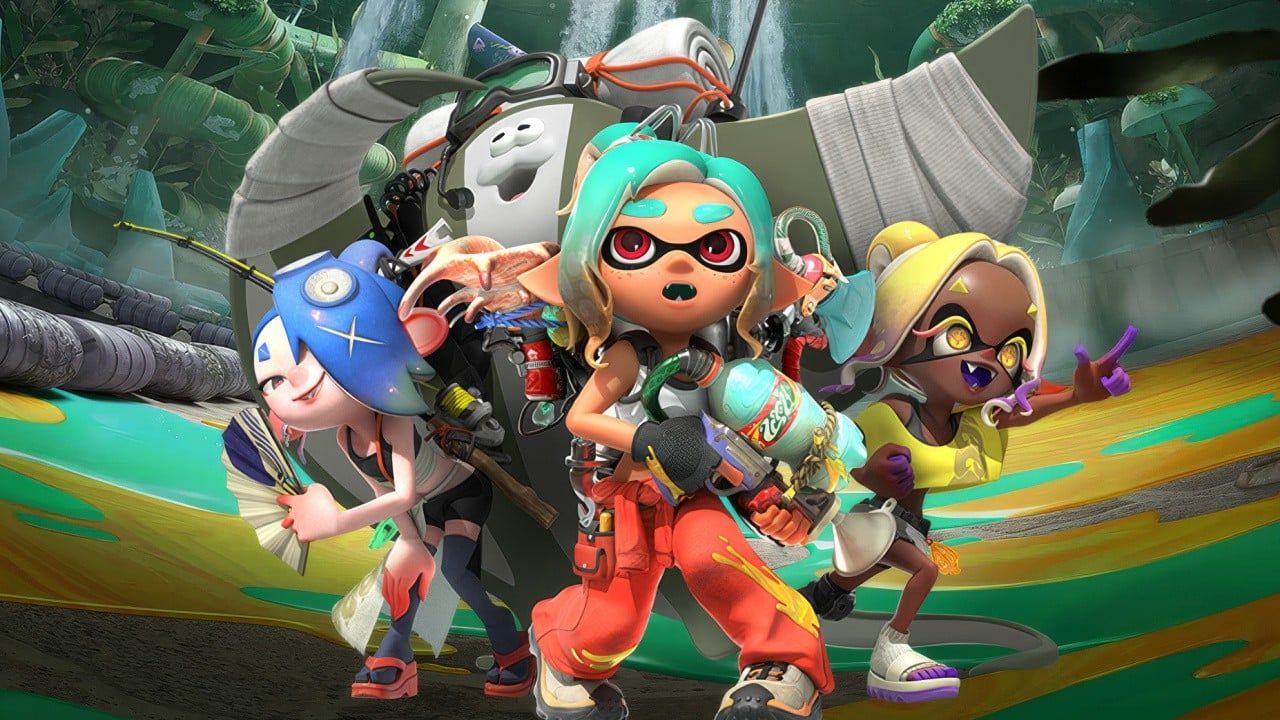
The shift in gaming hardware often brings more than just raw power; it signals an evolution in how games are designed and experienced. With Splatoon Raiders arriving as the fourth installment in the series, it isn’t just a new adventure—it represents a significant leap for the franchise, launching exclusively on the powerful Switch 2 console.
This move marks history for the series, introducing a new format that prioritizes single-player and co-op experiences after years centered around broad multiplayer fun. Positioned as an accessible spin-off, the game manages to pack compelling content into a modest 13GB installation size and an approachable price point of £42, making high-fidelity action available to a wider audience.
The real excitement, however, lies in how Splatoon Raiders utilizes the enhanced capabilities of the Switch 2 hardware. The generational jump allows developers to push visual boundaries, delivering a markedly clearer experience compared to previous titles. For instance, while games like Splatoon 3 had to balance dynamic resolution ranges between 840p and 1080p when docked to maintain smooth frame rates, Splatoon Raiders steps up the quality significantly.
When played in docked mode, the game leverages the Switch 2‘s power to render at a stunning 1440p resolution, occasionally dipping to counts like 1260p. Portability is equally improved; the portable mode maxes out the built-in screen at a native 1080p, representing a major upgrade from the 540p to 720p range seen on the original Switch.
Despite these graphical enhancements, the journey toward perfect visuals still presents some challenges. Anti-aliasing remains an area where performance is carefully managed. The game utilizes a custom mobile variant of AMD’s FSR technology alongside SMAA to smooth out visual artifacts like pixel crawl and shimmer on complex surfaces such as rusted metals and intricate fishnets.
While this technique provides noticeable mitigation over earlier titles, it doesn’t eliminate the compromises entirely. Notably, in portable mode, the raw 1080p image does not receive any anti-aliasing treatment at all, proving that even with next-generation hardware, achieving flawless visuals requires careful engineering.
Buy on Amazon
Credit