
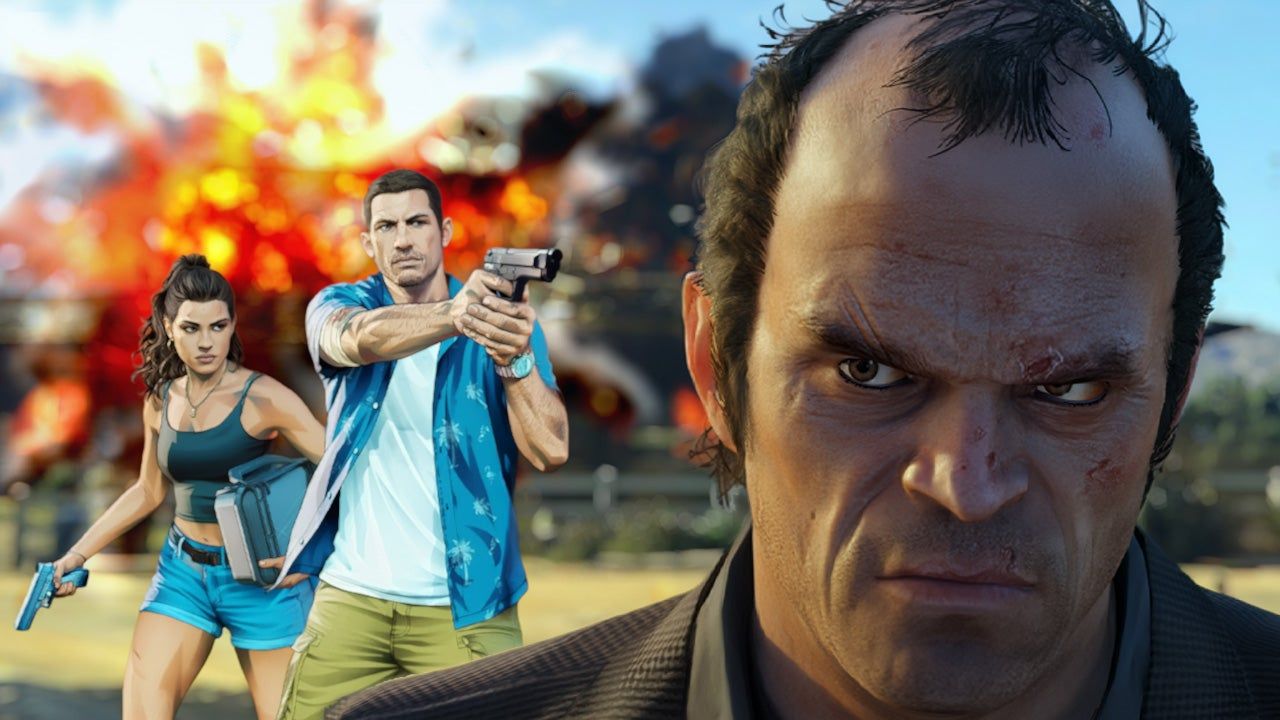
Trevor flips the bird at Rockstar haters
From the stoic persona of Claude in GTA 3, Rockstar Games has built a pantheon of leading men whose stories have melted the hearts of millions. But amidst this rich cast, one character stands out as their most brilliant and subversive creation: Niko Bellic.
Yet, Rockstar’s true triumph lies in the fact that their other greatest character is not subversive at all. Instead, he is Mr. GTA—the embodiment of everything you might associate with the series: a gloriously nasty psychopath who perfectly encapsulates the spirit of the game.
The introduction of characters like Trevor Philips was an attempt to address what some call “Ludonarrative Dissonance”—the conflict where the actions of the player in the open world clash with the character’s motivations. This tension reached an absurd peak in games like GTA 4, where a character might have a profile reading “Sad About War” while engaging in endless mayhem against police and bystanders.
This dynamic highlights the existence of two Niko Bellics: the character written by the creators, and the avatar that exists solely as a conduit for player agency. In this framework, we see two CJs and two Arthur Morgans: the voice given by writers, and the entity that grants the power of choice.
In GTA 5, Trevor Philips is not just a conduit; he almost is The Player made manifest within that universe. He functions as an ambassador for the user, a composite of playing styles imbued with an overactive sex drive and a thirst for mayhem achieved for its own sake. Imagining what happens when this specific GTA figure gains narrative agency is endlessly compelling.
Trevor’s infamous introduction sets an immediate tone: he enters the story at perhaps his most vile, motivated only by base desires—murdering a former protagonist simply for speaking out of turn. This stark contrast with the more hopeful narratives previously explored in the series provides an intense emotional punch.
While some view Trevor as the true villain, lacking conventional likability, the challenge for the writers was making him compelling without succumbing to outright contradiction. He possesses a moral code rooted in loyalty and a deep-seated rage, yet he also demonstrates an unwavering allegiance to those he cares about, including his family.
As his history is fleshed out through gameplay, tragic revelations emerge: experiences of childhood abuse, the shadow of serial strangulation, and a complicated past as a fighter pilot. Though inspired by his Canadian roots, Trevor embodies the archetype of the troubled veteran utterly failed by the system, making him one of the most potent jokes in the entire game.
Rockstar masterfully gives Trevor dimensions and layers to rival Niko Bellic, achieving a state of ludonarrative harmony. Unlike previous iterations that struggled with this balance, Trevor exists untethered from mainstream moral constraints, exiting the media’s influence on a rocket ship powered by pure cash.
This approach proves that satire requires humanity. By building a character who unapologetically embodies all the degeneracy once stereotyped with in GTA, Rockstar made a profound joke at their critics. They garnished that joke with brilliant, emotive depth, transforming depravity into something deeply relatable.
Ultimately, the success of GTA stemmed from its power to capture the human condition—the confused ape thrust into a bewildering reality. Whether it is Trevor’s expression of angry chaos or Niko’s yearning for quietude, these characters reflect fundamental aspects of humanity. By imbuing their stories with real stakes, Rockstar has elevated the franchise, demonstrating that freedom and emotional complexity are far more interesting than mindless crime simulation.
Credit