
Wild Blue Sky View Review
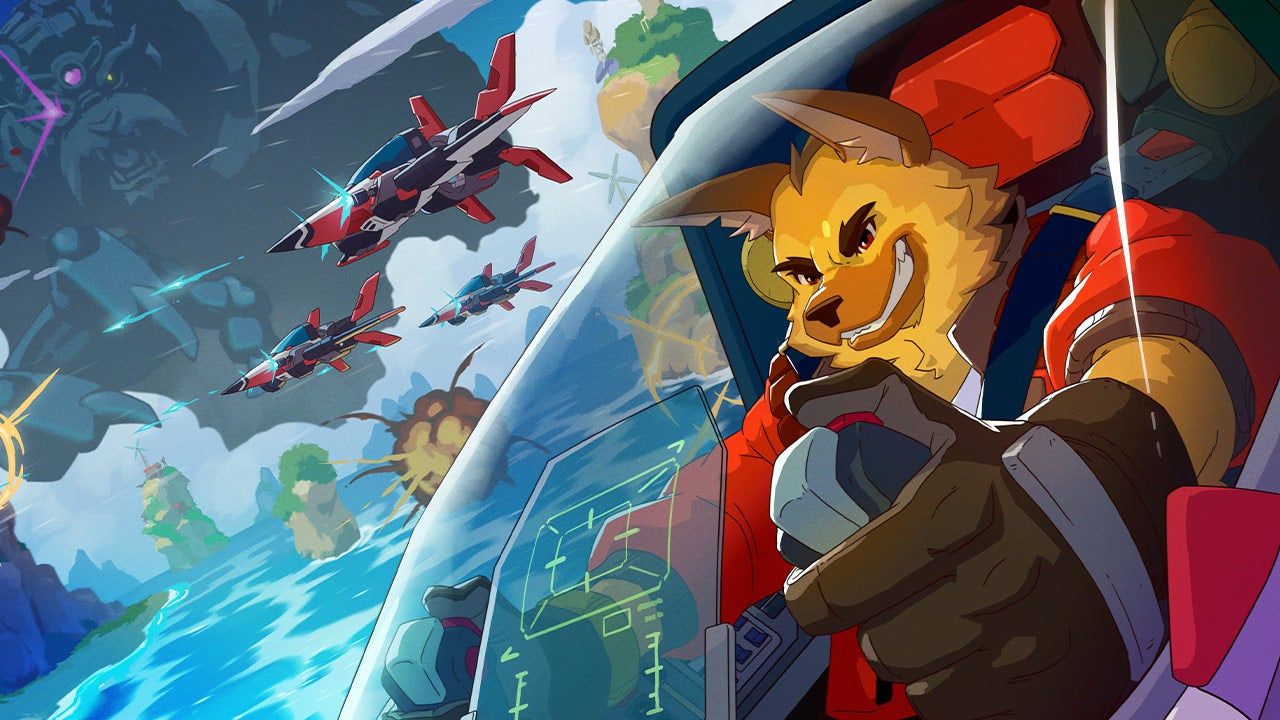
Some games are designed to be monuments, while others are simply echoes. When a new title attempts to pay homage to a legendary classic, the expectation is high—that it will capture the soul of the original. But when looking at Wild Blue Skies and its inspiration, Star Fox 64, the experience becomes less about tribute and more about a fascinating study in execution.
The lineage between the two games is undeniable, rooted in a grand narrative of an evil figure named Andross Grimclaw and a desperate fight for the Lylat System. The characters often map one-to-one, with pilots like Bowie Stray and Roe Whitetail filling roles reminiscent of Fox’s iconic crew. While this familiarity sets a comfortable stage, it immediately raises the critical question: does copying the structure guarantee brilliance?
On the surface, Wild Blue Skies delivers the familiar formula: a rail shooter involving piloting a ship through branching levels to chase high scores. It successfully mimics the core mechanics of its predecessor, including the ability to collect bombs, upgrade lasers, and use charge shots for score multipliers. It is fundamentally sound—the structure itself offers near-infinite replayability.
However, where the homage falters is in the fine details that give a classic its magic. The physics feel inherently mismatched. Where Star Fox 64 featured nimble, responsive flight, the ships in Wild Blue Skies feel less like high-speed combat and more like racing yachts. The handling lacks the satisfying tilt and barrel rolls that made the original movement feel instinctive. Furthermore, the visual feedback is inconsistent; bomb explosions are simplified circles rather than the satisfying star patterns, and the charge shot mechanics fail to deliver the same precision.
These mechanical shortcomings extend to essential systems like health management and upgrades. The laser system, intended as a dynamic element, becomes arbitrary; upgrades disappear inconsistently based on health thresholds, often forcing players into frustrating restarts. This lack of predictable mechanics undermines the flow, turning combat into an exercise in frustration rather than skillful engagement.
Perhaps the most significant critique lies in how Wild Blue Skies handles its challenging intent. While it aims to punish mistakes, it does so by restricting fundamental player agency. In contrast to the triumphant feeling of making a comeback in Star Fox 64—where mistakes were overcome by sheer skill and resilience—Wild Blue Skies often makes failure feel punitive. Healing items are scarce, health pickups are minimal, and the overall system restricts the player’s ability to simply recover from setbacks.
The level design further complicates the picture. Many stages in Wild Blue Skies are essentially reskins of familiar environments. The differences often boil down to cosmetic changes rather than innovative spatial design. When levels merely replicate the staging and action of classic stages without introducing new narrative or mechanical hooks, the homage feels less like inspiration and more like imitation.
Yet, amidst these flaws, there are moments where the game soars. Certain level designs manage to transcend mere copying. The sequence in Canyons offers a novel aerial sequence that feels genuinely inventive and spectacular. Similarly, other areas achieve a visual stun, demonstrating that the developers have the capacity for genuine creativity when they step away from direct imitation.
Ultimately, the enduring magic of a classic game lies not in its ability to be copied, but in its bold refusal to be constrained. Wild Blue Skies proves that while brilliant imitation can set a baseline, true innovation requires doing something new. The greatest experiences are achieved when a game has the courage to evolve beyond the echoes of its past, finding an entirely original way to deliver feeling and spectacle.
Buy on Amazon
Credit