
Wingspan Pocket Card Game: Gameplay Review
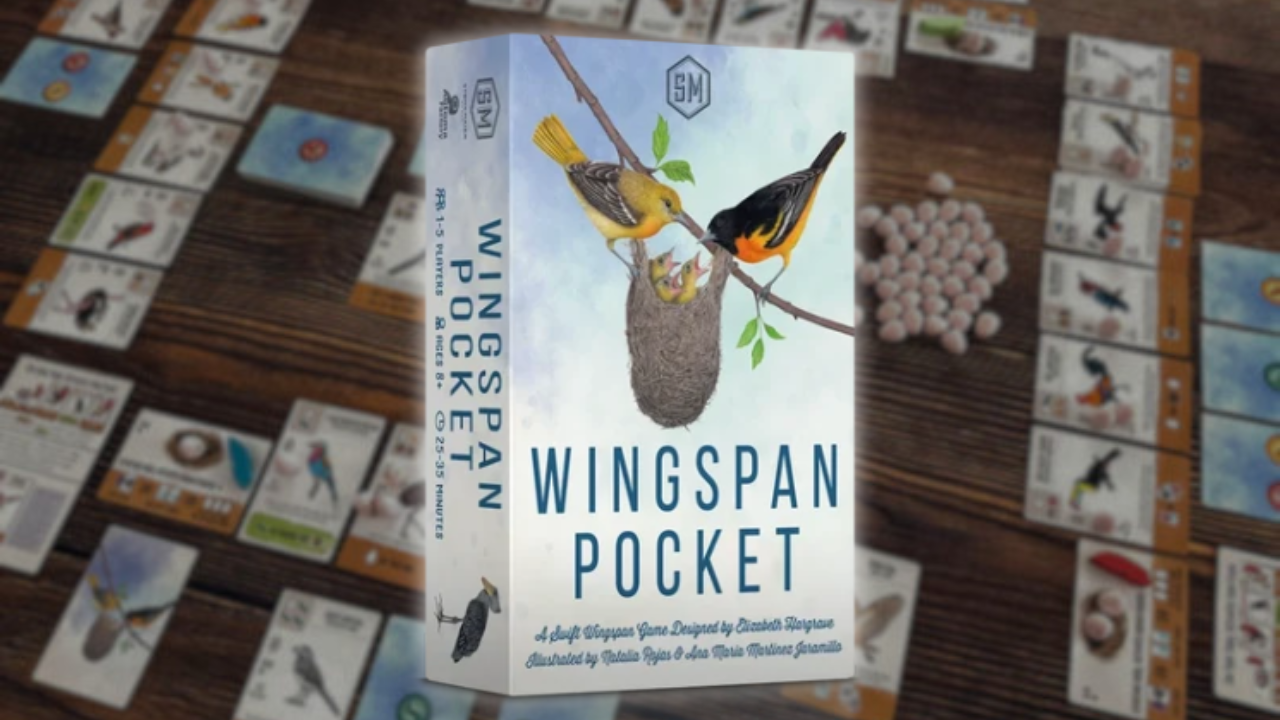
Board games, especially those that delve into the fascinating world of ecology and strategy, often come with a steep learning curve. Take Wingspan, for instance—a multi-million selling hit that introduced many to the delight of engine-building games. While the theme is undeniably charming and appealing, mastering the game’s complex rules can sometimes feel like a significant barrier for newcomers.
Enter Wingspan Pocket, a fresh take designed to dismantle that hurdle without sacrificing the strategic depth. Created by Elizabeth Hargrave, the same brilliant mind behind the original, this streamlined version manages to distill the core mechanics of the game into a convenient, bite-sized package. It’s an exercise in elegant subtraction: cutting away the complexity while retaining all the strategic delight.
The physical components reflect this clean design. The box is filled with resin eggs that instantly evoke the original game’s aesthetic, featuring subtle freckles and speckles to enhance realism. Players also receive packets of wooden feathers, one for each player, adding a tactile element to the experience. The deck itself features familiar bird artwork and layouts, offering a delightful visual connection for veterans, even as mechanical details shift.
Beyond the cards, players receive helpful aids, including nest cards and a special automaton for solo play, which further cater to different ways of engaging with the game. This is not just a simplified wrapper; it’s an invitation to discover entirely new pathways of interaction.
The gameplay centers around a simple but potent system. Cards are double-sided, acting as either food or birds, forcing players into clever choices from the start. Players use their nest cards to execute actions—playing birds, taking cards, or placing eggs—which are essential for managing resources and building an economic engine.
The real magic lies in the synergy between the birds. Each bird possesses a special ecological power, such as the nefarious Cuckoo placing an egg on another bird or the ghostlike Snowy Owl potentially drawing a new piece of wildlife. Players must strategically combine these powers to create efficient pathways, turning resource management into a satisfying optimization exercise. A perfect example is setting up combinations where one bird provides food or eggs that enable the next action, allowing players to place birds into play faster and build an unstoppable sequence.
This focus on synergy means that clever combo-building—like finding a chain reaction between different bird powers—is key to success. Players must constantly adapt their strategies as new cards appear, balancing the desire to acquire valuable wildlife with the need to utilize powerful abilities. This system keeps the game dynamic and engaging, demanding constant strategic rethinking within a swift 10-15 minute playtime.
Ultimately, Wingspan Pocket proves that accessibility doesn’t require simplification of substance. By trimming away unnecessary rules and focusing on the inherent interplay of nature and strategy, it stands as a masterclass in efficiency. It successfully recreates the engaging feel and core strategic decisions of the original game while offering unparalleled convenience, making sophisticated engine-building accessible to everyone.
Buy on Amazon
Credit