
Epic Big Walk Review
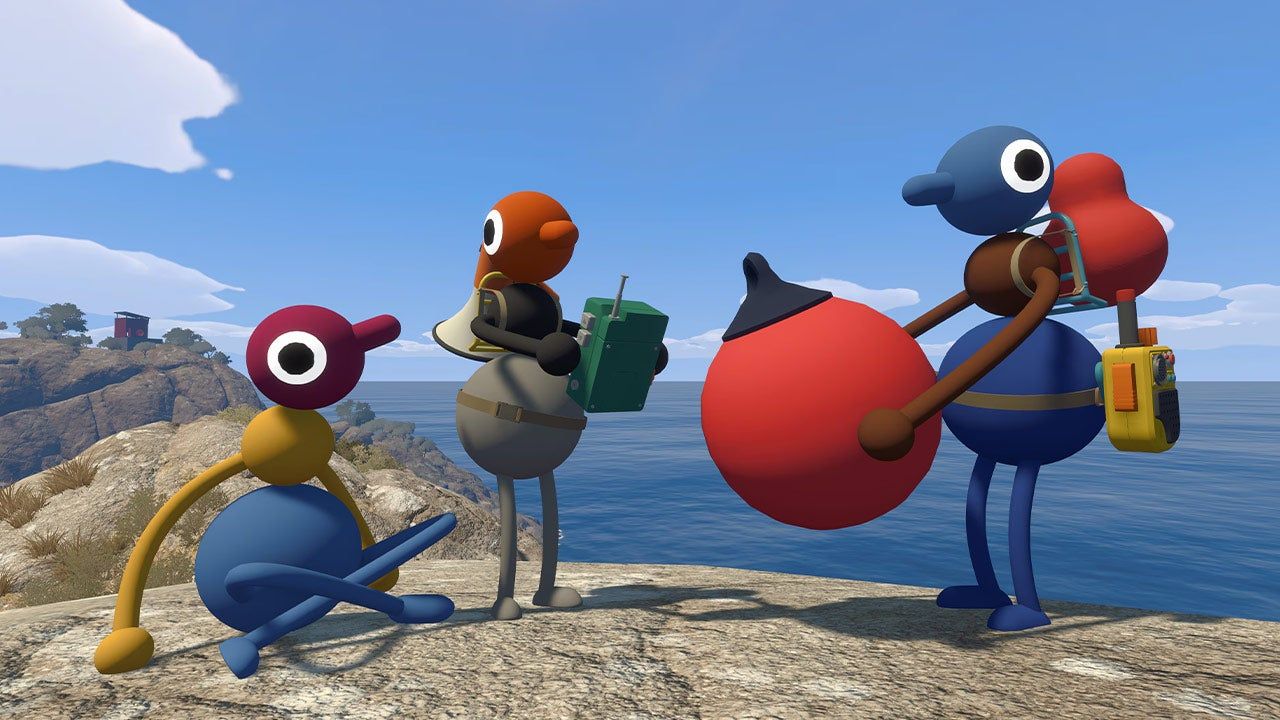
In the world of cooperative gaming, Big Walk isn’t just about solving puzzles; it’s an immersive lesson in connection. It is a puzzle adventure built entirely on shared experience and the necessity of communication, pushing players to decipher not only clever mechanics but also the unspoken language that binds them together.
The game drops players into a playground of colorful, blocklike structures, immediately setting up a unique dynamic where the objective isn’t immediately obvious. With no defined mission, players are free to fiddle with buttons and clang cowbells, testing out movement options—often relying on arm gestures—before venturing into a lush, lifelike world. This environment forces cooperation from the very first step, turning exploration into an exercise in synchronized discovery.
The core genius of Big Walk lies in its communication limitations. Players interact via proximity-based voice chat, meaning voices are muffled behind walls and echo in vast tunnels. This mechanic ensures that teamwork isn’t optional; it is the primary tool for navigating the world. Losing access to others when wandering too far off transforms the experience into a truly cooperative adventure, emphasizing that success depends entirely on listening and understanding your companions.
Venturing through this world involves more than just talking. Players must develop their own communication methods, creating an intricate system of body language and visual cues. Whether coordinating a synchronized button push across distant platforms or figuring out complex timing puzzles, players naturally establish a unique cipher—a shared language that only they understand. This process of building a mutual vocabulary deepens the sense of presence and collaboration.
The game’s world is designed to nudge its players toward collective action. Puzzles are scattered throughout the environment, often embedded within brightly colored structures like horror movie houses or colosseums. These challenges range from simple tasks, such as throwing objects into targets, to more intricate mechanical hurdles that demand precise platforming and timing. The solutions aren’t strictly linear; players can discover challenges in any order, rewarding them with the ability to create their own method of solving problems.
As teams tackle these puzzles, they are rewarded with tokens—red beans—which must be collected and deposited into bean towers. This progression unlocks access to greater tools, allowing players to operate things they couldn’t figure out before, such as stalled trains or island-spanning chairlifts, embedding the ethos that discoveries belong to the group.
The world itself operates on a dynamic day-night cycle, where the shift to pitch darkness introduces new challenges. During these nights, players must rely on heightened communication and careful navigation, often using tools like flashlights to avoid getting lost in the deep shadows. This contrast between light and dark amplifies the feeling of dependence and urgency.
Ultimately, Big Walk reframes what it means to be a player. Instead of focusing on individual heroism, the game shifts the focus onto relationships and shared understanding. The world doesn’t revolve around the individual character; instead, it revolves around the group. It suggests that true power in this virtual space is found not in solitary achievement, but in the language developed between companions.
This emphasis on relationship extends beyond the game itself, touching upon profound ideas about naming and understanding the world. Just as we build relationships through shared names, the experience of Big Walk invites players to consider how they build their connections with the world around them, proving that the most valuable discoveries are made together.
Buy on Amazon
Credit