
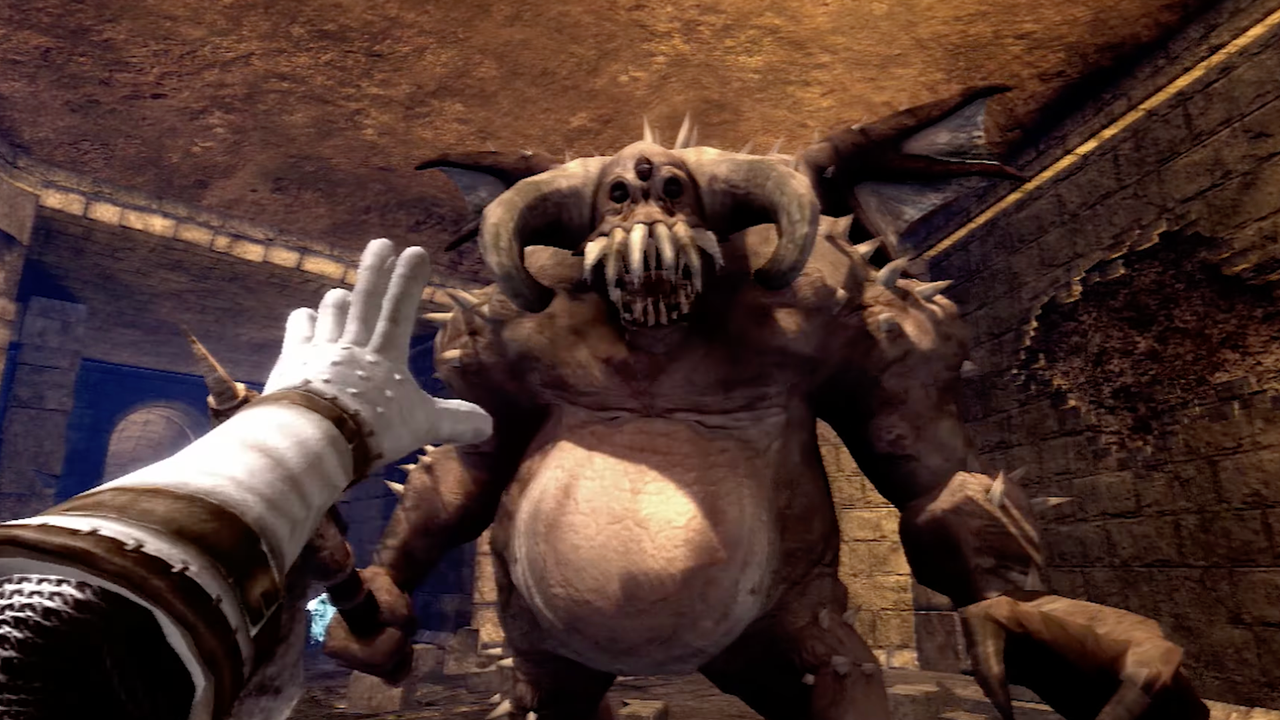
Unused Dark Souls enemies in prototype show first-person perspective
The legend of Demon’s Souls isn’t just a tale of challenging gameplay and crumbling gothic kingdoms; it’s the story of an experimental foundation that shaped modern dark fantasy video games. Before it became the masochist’s medieval horror of choice, this title was an ambitious experiment by Japan Studio and the team that would become FromSoftware.
Those early days laid down crucial conventions that define the genre today: punishing difficulty, haunting aesthetics, and a world designed to test the limits of the player. But behind the polished final product was a prototype that offered a glimpse into a darker, more connected vision.
A rare look at these infant days emerged when video game content kingpin Lance McDonald revealed a previously lost prototype presentation from 2007, showcased at a conference called Gameshare 4. This presentation offered fascinating insight into how the concept evolved from initial sketch to massive cultural phenomenon.
The history connecting this project is deep. Company notes indicated that the publisher had already positioned FromSoftware as the creative force behind King’s Field in 1994, a game often considered the true grandfather of the Dark Souls formula. This context highlights just how far the seeds for modern soul games were sown long before titles like Elden Ring and Bloodborne emerged.
The prototype itself showcased a striking vision of the world. It featured “photorealistic quality” landscapes and mad, mutated enemies—some designs that never made it into the final game, such as a serpent knight with a squiggly neck and tall boots. Furthermore, an optional first-person perspective was demonstrated, similar to King’s Field, placing the player directly within the formidable world of the bosses.
Japan Studio distinguished Demon’s Souls by emphasizing connectivity and immersion. They argued that online games are inherently time-consuming, stressing the importance of network interaction and the presence of ghosts—ethereal phantoms of other players who fought or were summoned for aid. This focus on community and connection established a unique layer to the experience.
The conceptual parallels between this prototype and FromSoftware’s later masterpieces are undeniable. Early concept art, for instance, featured luxurious grass fields haunted by massive rings of stone, strikingly reminiscent of boss areas in Elden Ring‘s Limgrave. Similarly, imagery depicting a gnarled dragon trapped in a pit glowing with red magma echoes the menacing figures seen in titles like Dark Souls.
Ultimately, while Demon’s Souls presented a solitary journey through dread, Japan Studio’s vision emphasized that loneliness is mitigated by belonging. The core appeal remains this heady mix of fear and fellowship, creating an enduring legacy where players feel not just isolated, but deeply connected to the shared, haunted landscape they inhabit.
Buy on Amazon
Credit