
Secret bookshelf saves you from choosing games on Wii Homescreen
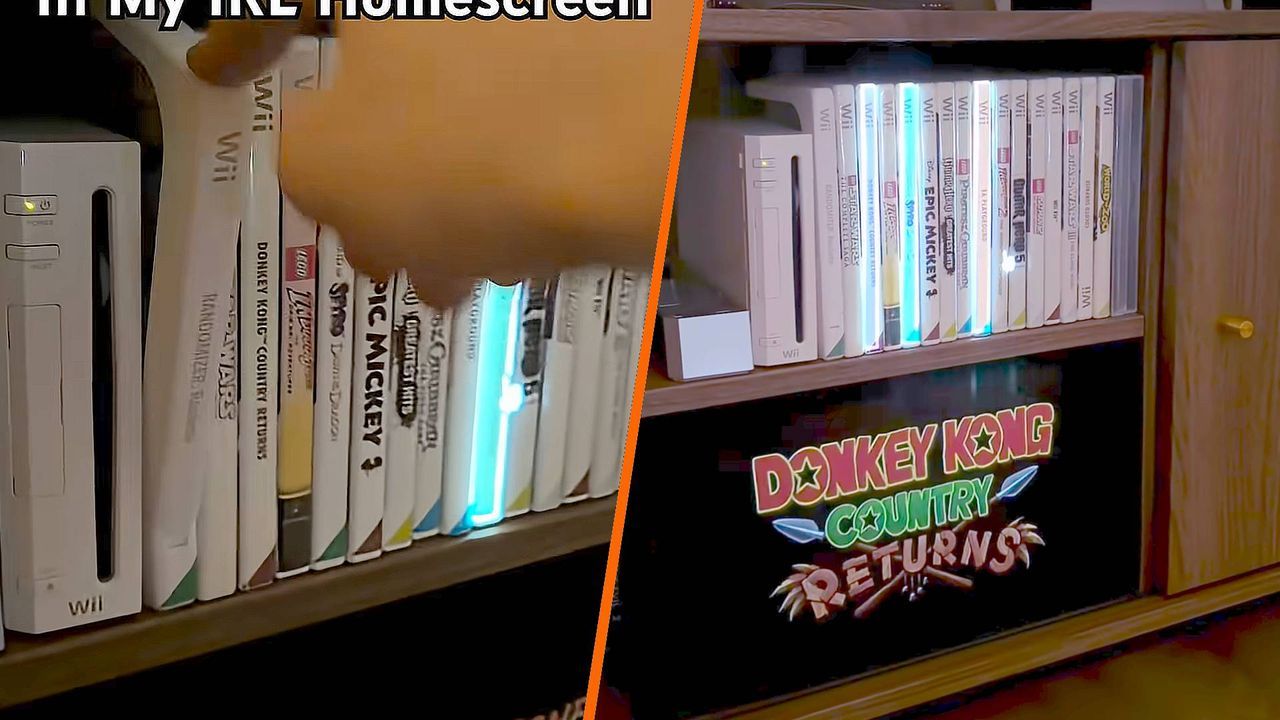
What happens when the tactile joy of a physical game collection meets the convenience of a digital library? The result is something truly ingenious: the IRL homescreen project is rapidly becoming a physical manifestation of that dream, turning the chore of choosing a game into a delightful lightshow.
Created by AlmostInventor, this innovative system allows gamers to maintain the aesthetic appeal of their physical game shelf while benefiting from the organization and convenience of a digital collection. It bridges the gap between tangible retro games and the seamless experience of a digital media hub.
The core of the invention is a clever, secret mechanism designed to eliminate decision paralysis. Instead of manually scanning shelves, users can now initiate a randomizer that transforms game selection into a visual roulette lightshow. This feature lets users highlight physical game boxes, view animated artwork, and easily retrieve discs using integrated motors.
While the initial concept allowed for highlighting retro consoles or new releases, the project has evolved. Earlier iterations featured a more traditional, arcadey lever, but AlmostInventor upgraded the experience with a more whimsical, Scooby-Doo-inspired design. Pulling the “RANDOMIZER: Roulette” box forward now triggers a delightful sequence of selection sounds, mimicking a spinning wheel of fortune before landing on a single, randomly chosen pick.
The appeal of this randomization is deeply resonant. For those of us who often struggle with indecision—whether choosing a film, a meal, or a game—a system that handles the randomness offers genuine relief. It proves that integrating playful systems into everyday tasks can bring immense satisfaction, even when dealing with physical media.
Currently, the IRL homescreen remains a powerful proof of concept. It is a fascinating demonstration of how physical objects and software can interact seamlessly. The mechanism relies on 3D-printed components and precise placement, using software to project highlights onto games that are positioned within a specific area.
Despite its current focus on a confined space, the vision for the IRL homescreen is expansive. The developers are keenly focused on scaling the technology, aiming to expand the system to cover entire bookshelves and extensive game collections.
Ultimately, this project is more than just a gadget; it’s a statement. As major gaming companies contemplate the future of physical media, this initiative demonstrates a powerful desire among players to embrace the best of both worlds—the tangible experience of physical games and the seamless convenience of digital organization. It shows that players still crave the best of both realities.
Buy on Amazon
Credit