
Witcher 3 NPCs accidentally drop babies due to a bug
The Accidental Chaos: How Realism Led to Hilarious NPC Fails in The Witcher 3
The pursuit of world-class realism in video games often leads to unexpected and hilarious side effects. In the development of The Witcher 3, the team’s intense focus on creating a believable, immersive environment with dynamic daily cycles resulted in a bizarre, unintended consequence for the game’s female Non-Player Characters.
Quest designer Philipp Weber, a key figure in the development, admitted that the team was so deeply invested in simulating an authentic world that they accidentally caused some chaos in their digital village settings. They aimed to give the NPCs authentic behaviors, hoping to increase player immersion and reward exploration, but the result was far more chaotic than planned.
Weber explained that the focus was heavily placed on simulating the proper day and night cycle for the inhabitants. This meticulous attention to scheduling made the NPCs seem like living, breathing people going about their daily routines, but this commitment to their personal schedules clashed with the chaotic intrusions of Geralt wandering through their homes.
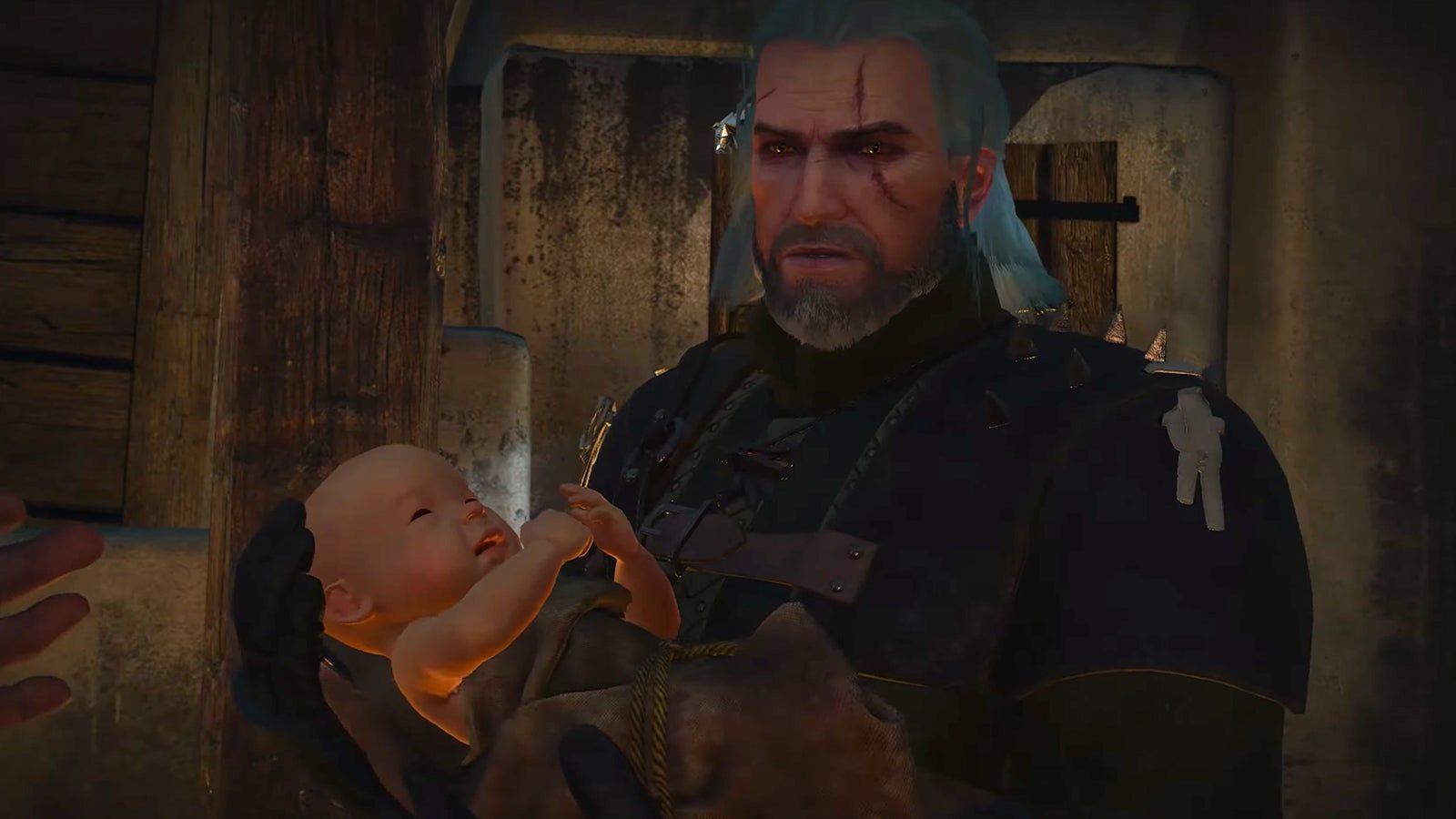
When Geralt would suddenly barge into a dwelling, the NPCs, rather than reacting logically to a threat, would drop whatever they were doing—including babies—and flee in fear. For a few weeks, the women in the villages were literally dropping their children left and right as they tried to escape danger.
While this outcome was objectively funny, the development team quickly recognized the need to smooth out these accidental physical gags. They knew that while the chaos was amusing, it needed to be resolved for the sake of player experience.
To address the problem, the design philosophy shifted from giving NPCs specific, rigid paths to a more flexible system. Instead of giving each NPC a defined route, the developers established a system of “spots of interest.” This meant NPCs could choose from various available activities—such as woodcutting or carpentry—and the game’s pathfinding engine handled the flow naturally.
For example, in a village setting, the system allowed for hundreds of possible points of interest. This ensured that even if a large group of characters were active simultaneously, they would still have dynamic options and believable choices, rather than getting stuck in an illogical, panicked sequence.
This strategic pivot allowed the team to maintain the richly detailed world they aimed for while mitigating the absurdities that arose from hyper-realism. The story of The Witcher 3’s NPC chaos is a perfect example of how the pursuit of technical perfection can sometimes lead to the most unexpected and entertaining digital realities.
Buy on Amazon
Credit